Medieval Unity environments
Make several interiors feel like one village, not one room copied four times
Keep the scale and visual language related across tavern, kitchen, bakery, and blacksmith spaces, then give each room a different job, density, and focal point.
Consistency is not the same as sameness.
A believable village can share proportions, material treatment, and stylization while each interior still has a different visual rhythm. The tavern should feel social. The kitchen should feel functional. The bakery should feel merchandised. The blacksmith should feel like a workshop.
If every room uses the same clutter density, furniture spacing, and lighting pattern, the village starts to feel like a prefab demo instead of a place.
Shared art direction
Choose the rules that repeat across every room
Repeat a few visual decisions, not the whole layout.
Keep scale consistent
Doors, tables, counters, tools, and props should feel like they belong to the same people and world.
Repeat material logic
Wood, metal, stone, and cloth should follow a related stylized treatment even when the exact assets change.
Vary density by job
A tavern bar can be busy, a bakery display controlled, a kitchen clustered around work zones, and a forge open around hot equipment.
Change the focal point
Give every room one dominant job and let its largest shapes and lighting support that job.
Tavern
Social spaces need circulation and clusters
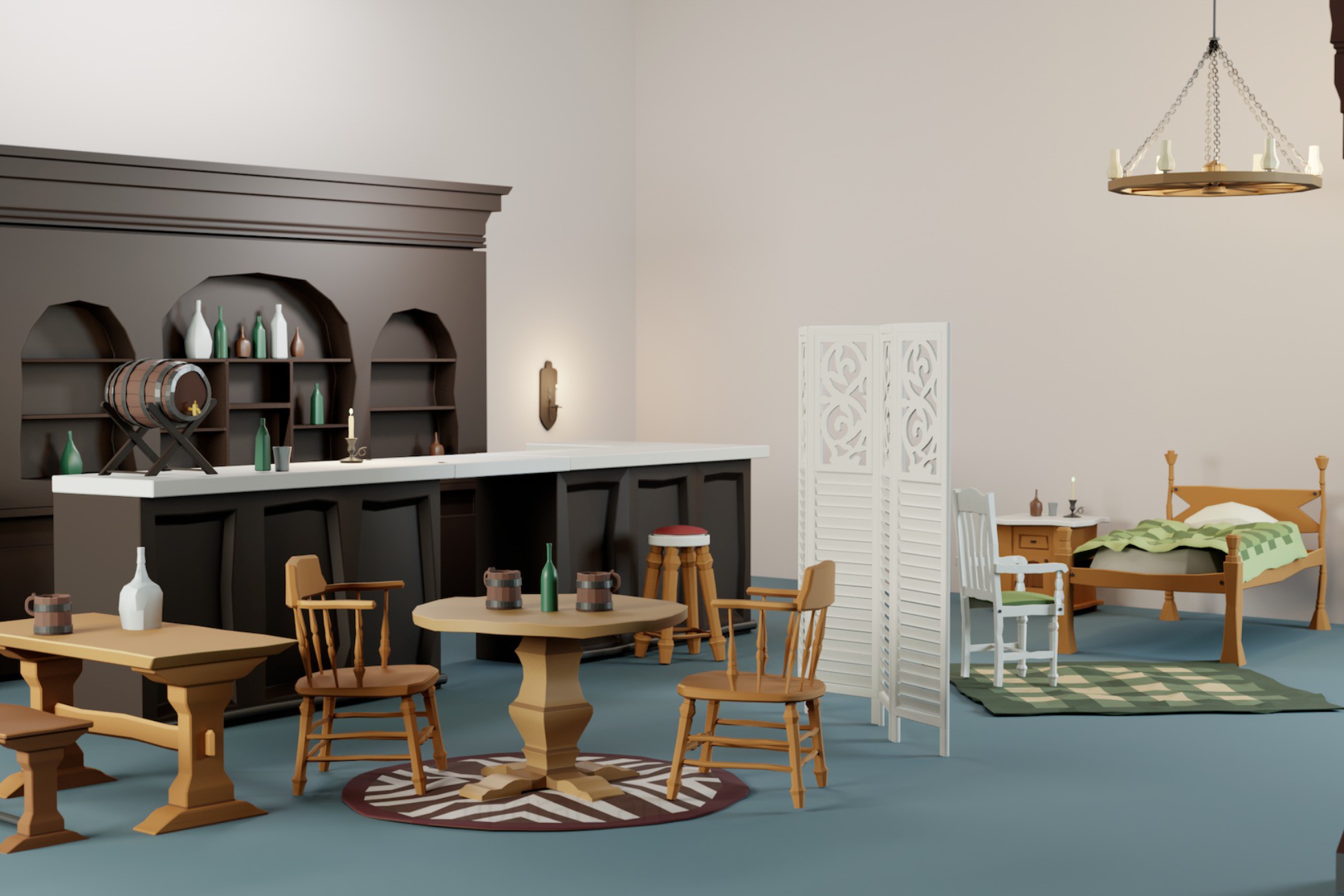
Use the tavern for the highest mix of seating, drink clutter, local lights, and repeated social props. Keep the path from entrance to bar readable even when the room is busy.
The tavern works best when the bar anchors the room and seating forms smaller social pockets.
Kitchen
Functional spaces need a short work sequence
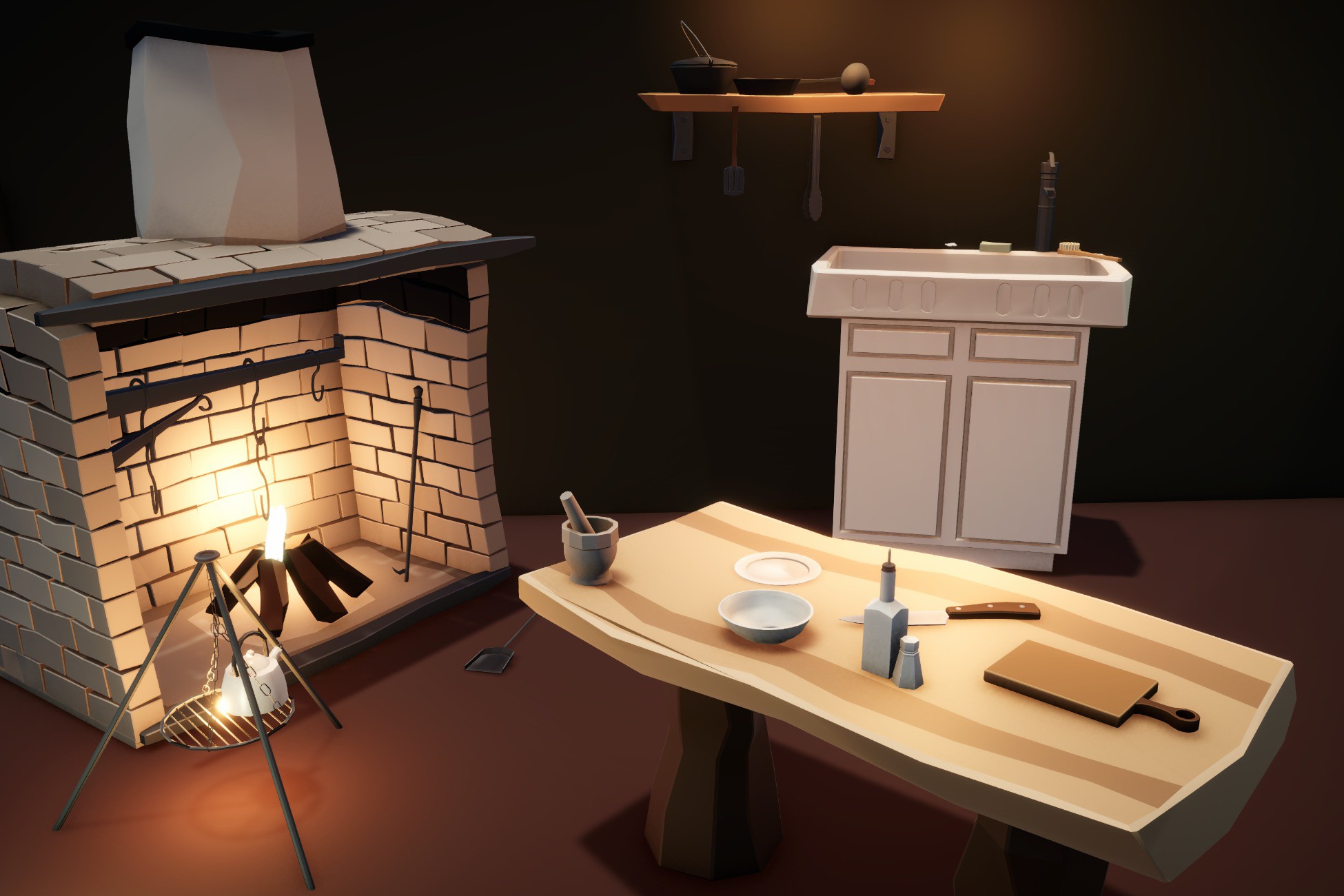
Compared with the tavern, the kitchen should feel tighter and more task-oriented. Let tools cluster around the station that uses them.
Hearth, prep, storage, and cleaning create a readable kitchen workflow.
Bakery
Retail spaces need a clear customer-facing display
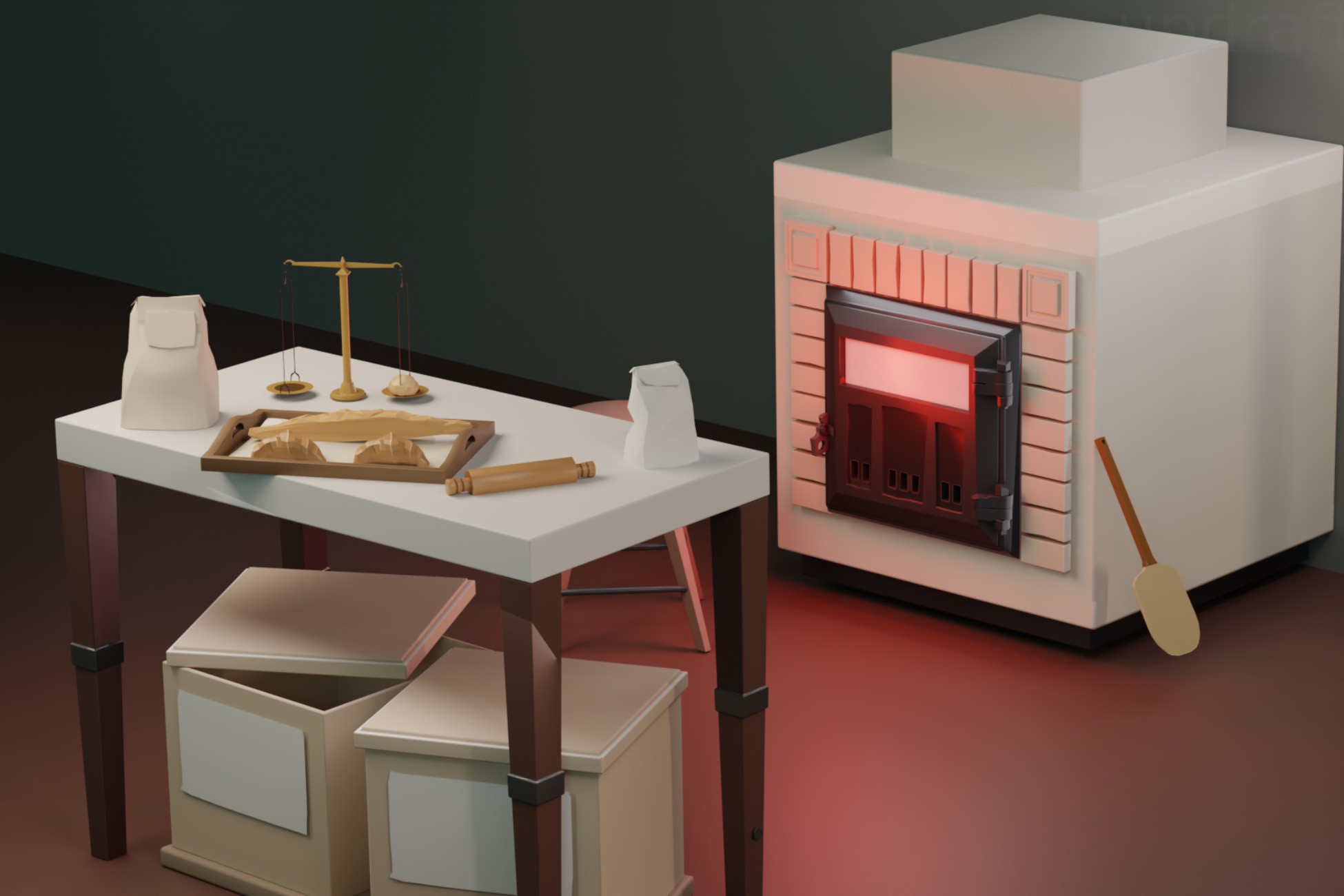
Use product repetition as inventory. Keep the display denser than the work area and protect the main sightline from the entrance.
The bakery should tell the player what is sold before they reach the counter.
Blacksmith
Workshops need clear stations and open floor around them
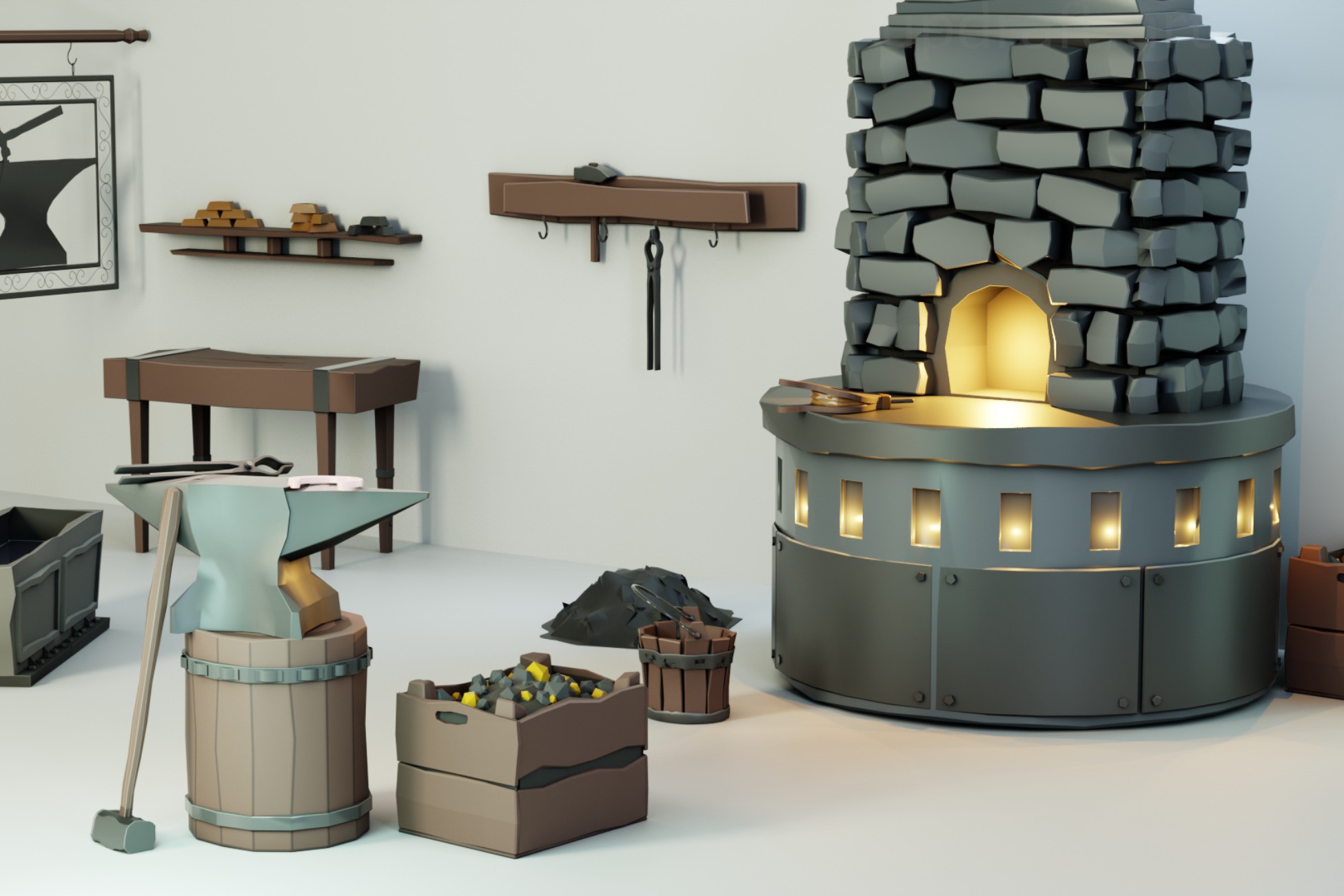
Let the forge carry the strongest light and silhouette, then place the anvil, tools, and grindstone as supporting stations.
Heat, shaping, finishing, and storage give the forge a task flow instead of generic medieval clutter.