Unity environment planning
Build the village as a route through useful places
Start with movement and district roles. The tavern, bakery, forge, kitchen, harbor, and market become easier to dress once the player path already makes sense.
Do not start by making the prettiest house. Start by deciding why the village exists and how the player moves through it.
A harbor village needs a strong connection between dock and settlement. A trade village needs a readable market route. A quest hub needs destinations that can be learned quickly and revisited without friction.
Once that structure works, the individual asset packs become layers on top of a village that already has a reason to look the way it does.
Village blockout
Plan four scales before you decorate
Move from the largest decision to the smallest so detail does not lock you into a weak layout.
Village purpose
Choose the reason the settlement exists: harbor, trade, farming, crafting, defense, pilgrimage, or something else that shapes the layout.
Main route
Connect the arrival point to the most important public destination with one path that is easier to read than the side streets.
Districts and landmarks
Group related functions and give each area a distinct silhouette or landmark so the player can build a mental map.
Destination detail
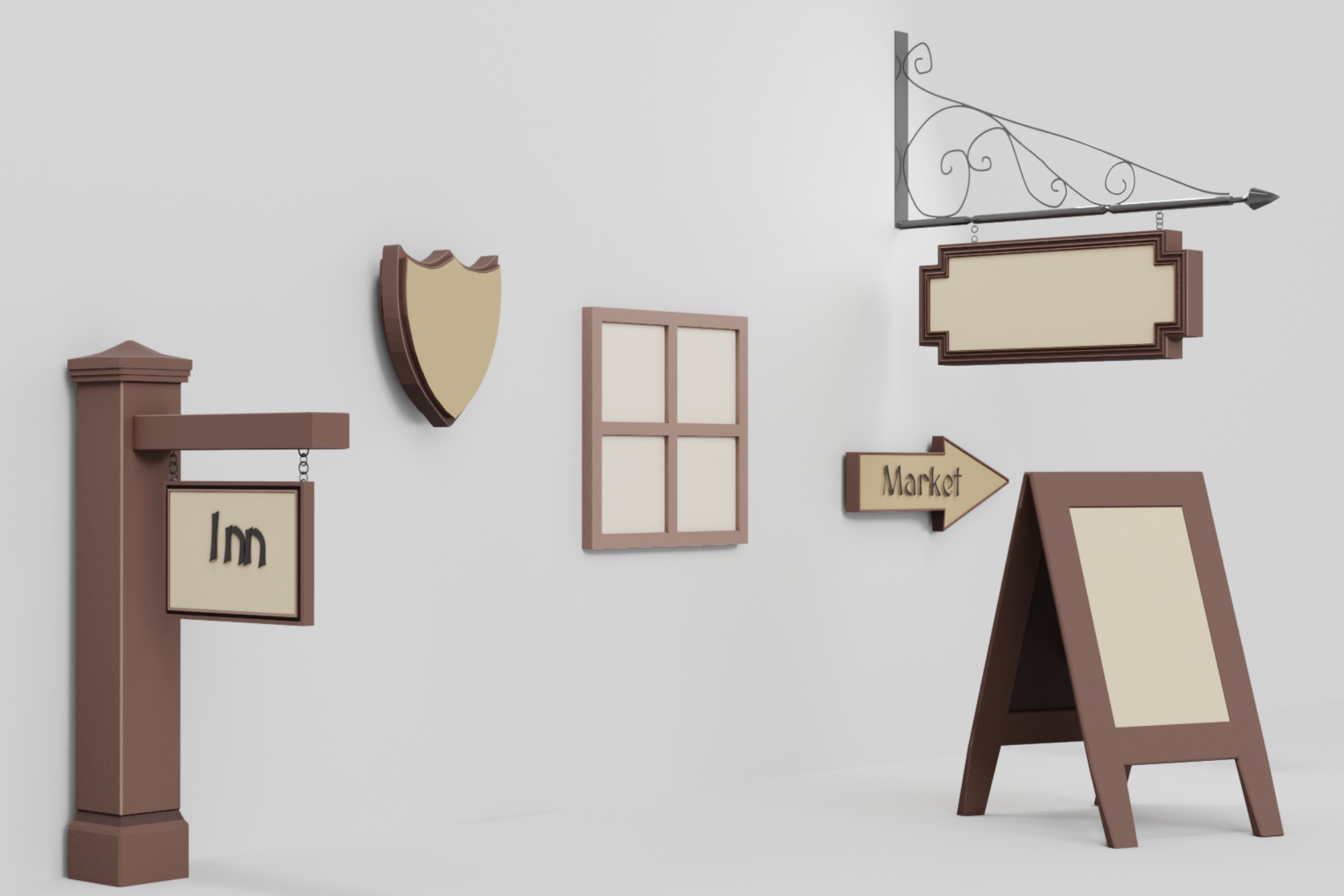
Only then spend time on shop signs, bakery displays, forge tools, tavern clutter, and interior prop stories.
Settlement shape
Let the terrain and arrival point decide the first half of the layout
Use the terrain to create constraints. A coast, hill, wall, river, or road gives the village a reason to bend and cluster. Those constraints usually create more memorable layouts than an even grid of buildings.
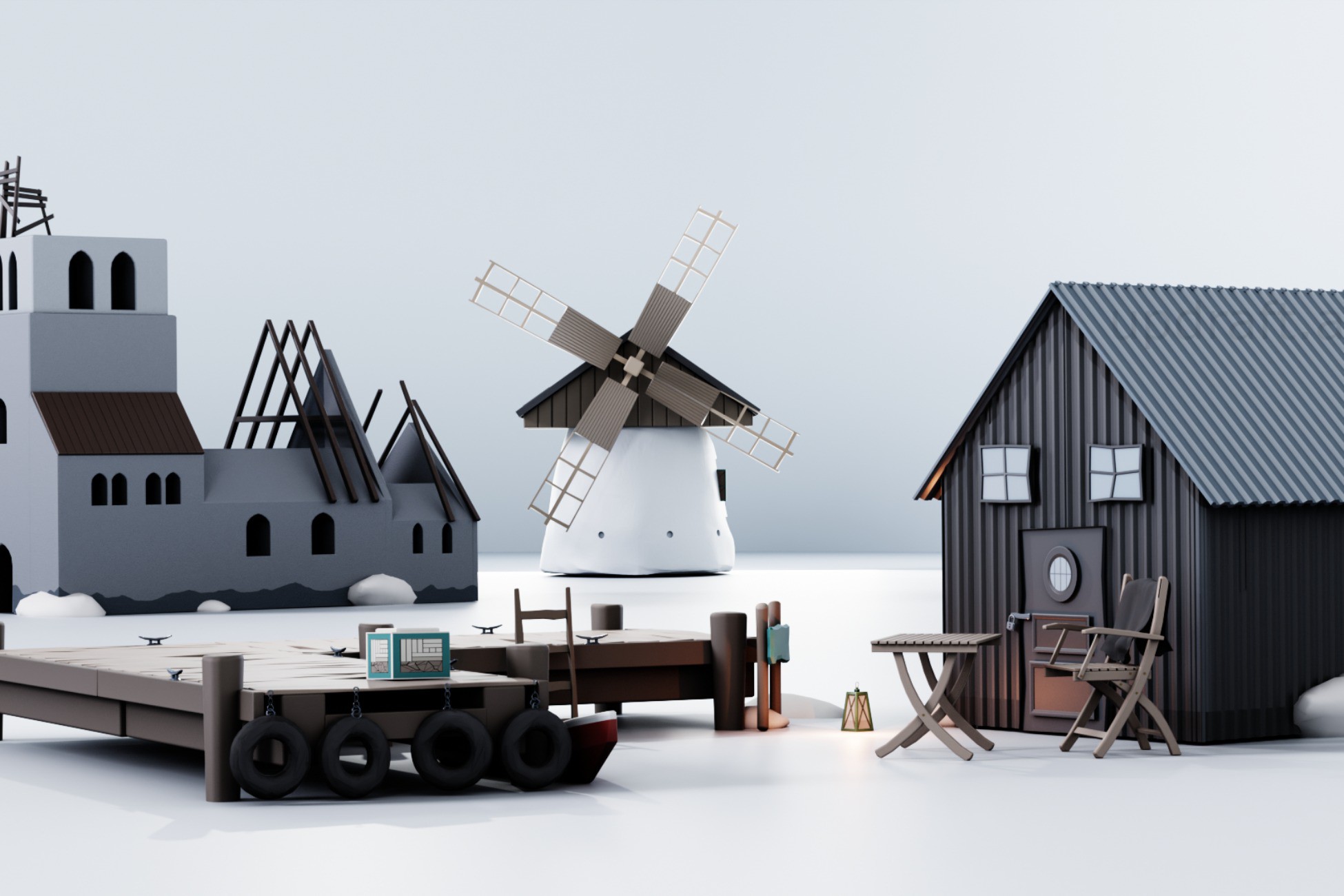
A shoreline village naturally organizes itself around the water edge, dock, and first route inland.
Public destinations
Make the market, tavern, forge, and bakery visually different
Repeat materials and proportions across the village, but change the functional cues. Food outside the bakery. Work tools near the forge. Barrels and warm light near the tavern. A notice board or crossroads post where routes meet.
A shared art style does not require identical storefronts. Give each destination its own sign shape and prop vocabulary.
Interior depth
Choose a few buildings to reward closer inspection
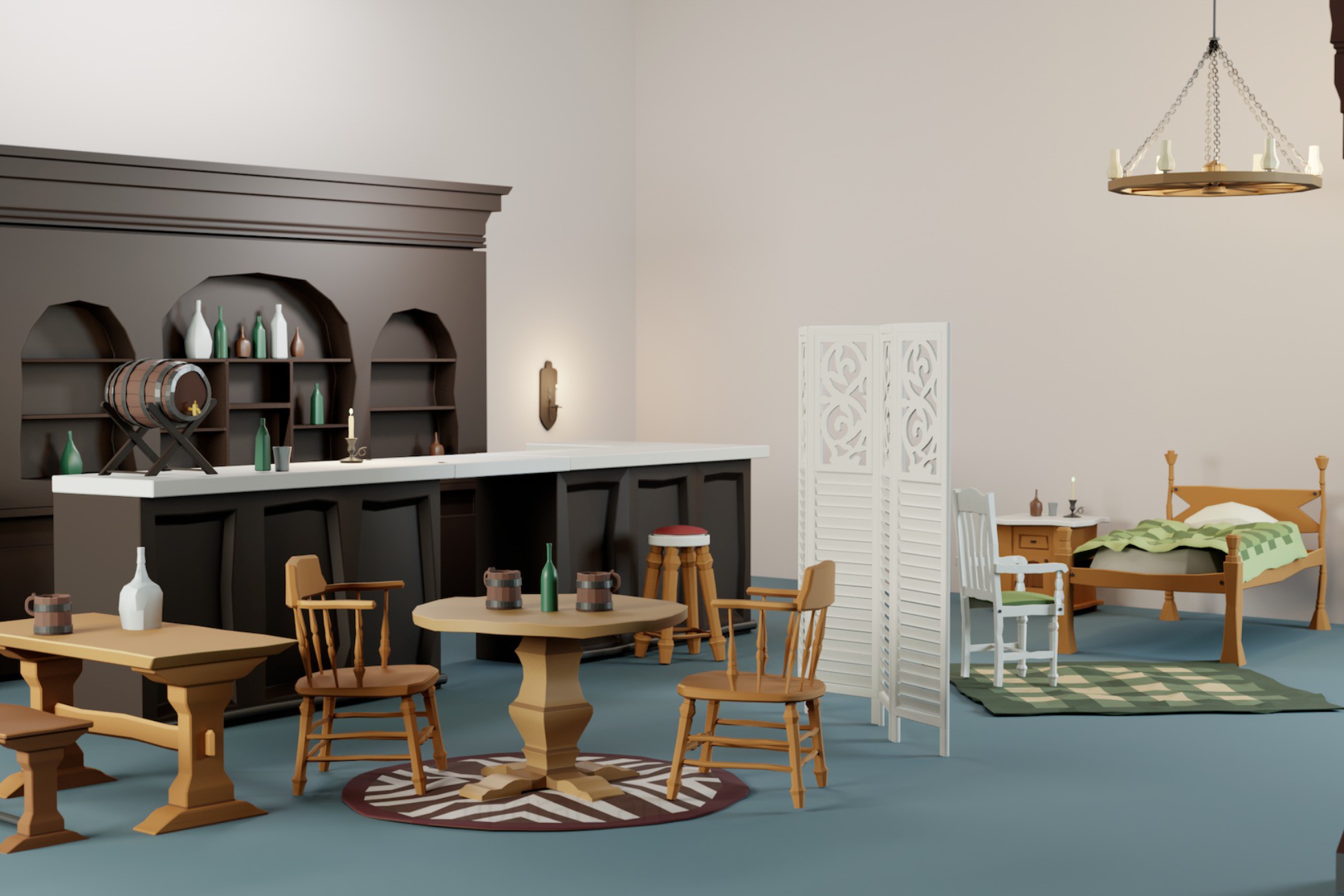
You do not need every house to be equally detailed. Put the production effort where the player spends time: the tavern hub, shop interiors, quest spaces, forge, or other gameplay destinations.
A village feels larger when a small number of destinations have richer interiors and stronger prop stories.