Unity environment guide
Build the market as a sequence of recognizable shops
The street should tell the player what each doorway is for before they stop to read a sign or inspect the merchandise.
A good market street is not a row of doors. It is a row of promises.
The bakery promises food. The forge promises tools and weapons. The tavern promises rest and social activity. Signs help, but the scene should communicate those roles through props, silhouettes, lighting, and what spills into the street.
Start by making each shop visually legible, then connect them with a street rhythm that keeps the player moving.
Street plan
Give every shop one dominant exterior cue
Do not try to explain the entire interior from the street. One strong cue is enough.
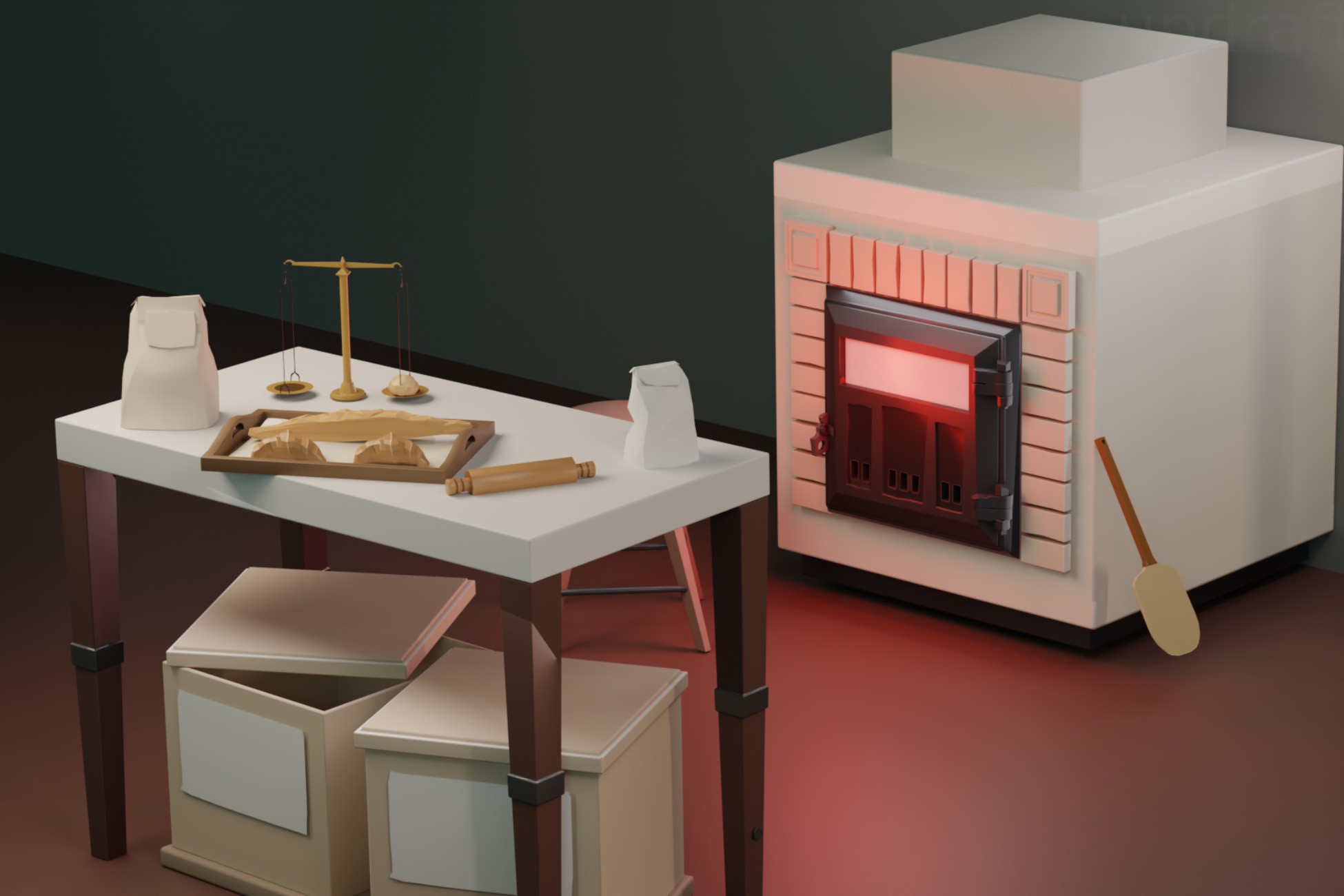
Bakery: show the product
Use bread, pastry, baskets, display pieces, or a small stall near the entrance so the shop reads as food from outside.
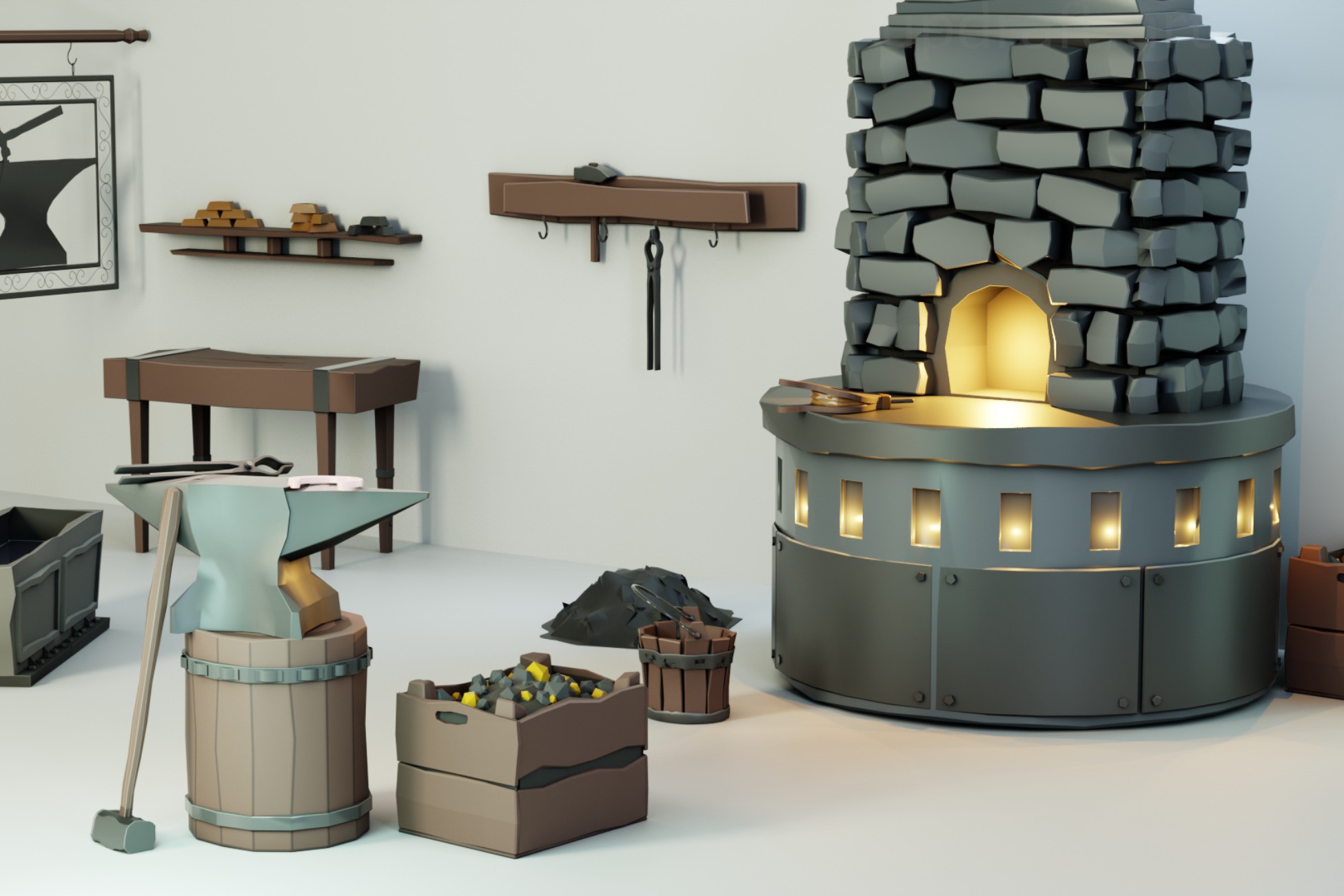
Blacksmith: show the process
Let tools, metalwork, a work area, or a forge-related silhouette signal heat and crafting before the player enters.
Tavern: show hospitality
Use a hanging sign, barrels, mugs, benches, warm light, or a wider entrance to make the social function obvious.
Tie the route together
Repeat paving, posts, lighting, and sign placement while changing the shop-specific props at each destination.
Bakery frontage
Put the merchandise where the street can see it
Keep the strongest food cluster close to the entrance or window line. The street only needs a quick read, so a few repeated loaves, baskets, or display pieces can do more than a fully dressed interior hidden behind the wall.
Food props do more than fill shelves. They tell the player what kind of shop this is before the doorway matters.
Forge frontage
Let the blacksmith advertise through function
Tools, an anvil, grindstone, or other work props can spill slightly into the exterior zone. That creates a different kind of visual noise than the bakery and gives the shop a stronger identity without changing the whole architecture.
Workshop cues make the forge distinct from another generic timber building.
Sign layer
Use signs to confirm the shop, not rescue it
A hanging sign is a final confirmation. If the bakery already looks like a bakery and the forge already looks like a forge, the sign becomes memorable branding instead of required explanation.
The strongest result is props plus silhouette plus sign, not a sign floating on an otherwise anonymous facade.
Skip the prop-modeling stage
Stylized Medieval Signs & Notice Boards
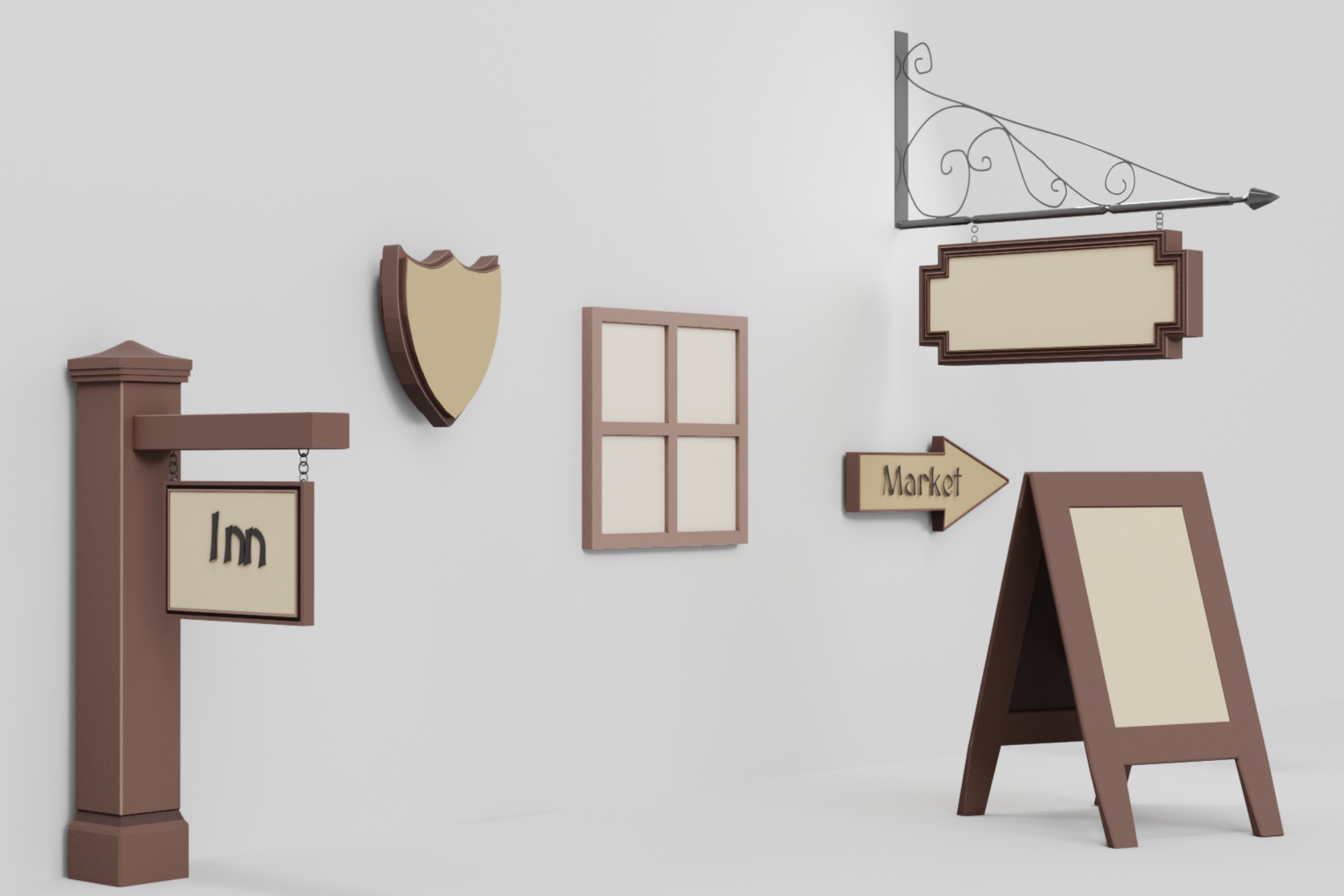
For the final street-readability pass, the signs pack gives you hanging signs, plaques, notice boards, arrows, and crossroads pieces that can sit on top of bakery, forge, tavern, and other shop-specific dressing.
- Rectangular, round, shield, post, arrow, and A-frame sign shapes
- Crossroads sign and notice board with paper sheets and pins
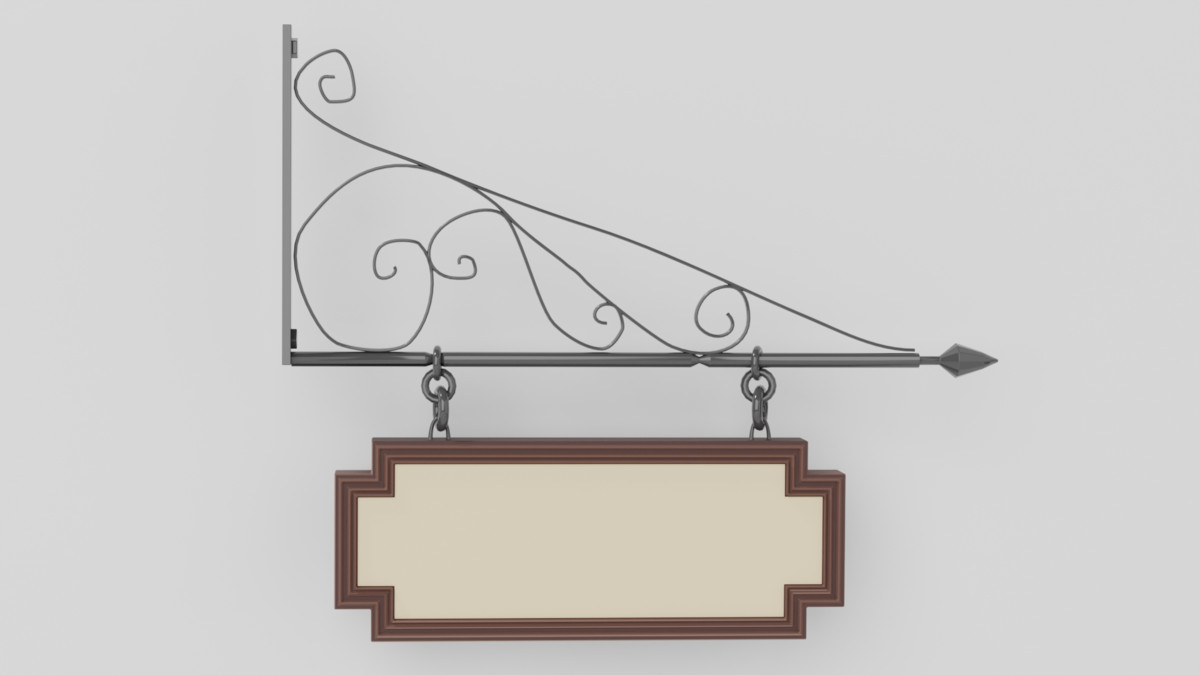
- Ornate and standard hanging brackets
- Preassembled hanging sign combinations
- Sign-face insert variations for changing the look quickly