Stylized environment design
Low poly works when the scene reads before the detail arrives.
Start with silhouette, route, scale, and contrast. A restrained prop library can feel richer than a huge library when every object has a clear job in the composition.
Low poly is not a triangle count aesthetic. It is a prioritization aesthetic.
The strongest stylized scenes make the big relationships obvious first. Buildings separate from sky, paths separate from ground, activity areas have distinct shapes, and focal props are not buried under equally loud decoration.
That makes the art easier to read and easier to scale across a full level.
Art-direction pass
Build the scene from large decisions to small ones
Each layer should still work when the next layer is hidden.
Lock the horizon and silhouette
Judge the scene from gameplay distance. Make sure roofs, towers, trees, docks, and major props create distinct readable masses.
Make the route obvious in shape and value
Use path width, negative space, fences, shoreline, lighting, or floor changes so the player can read where movement is expected.
Give each zone one visual promise
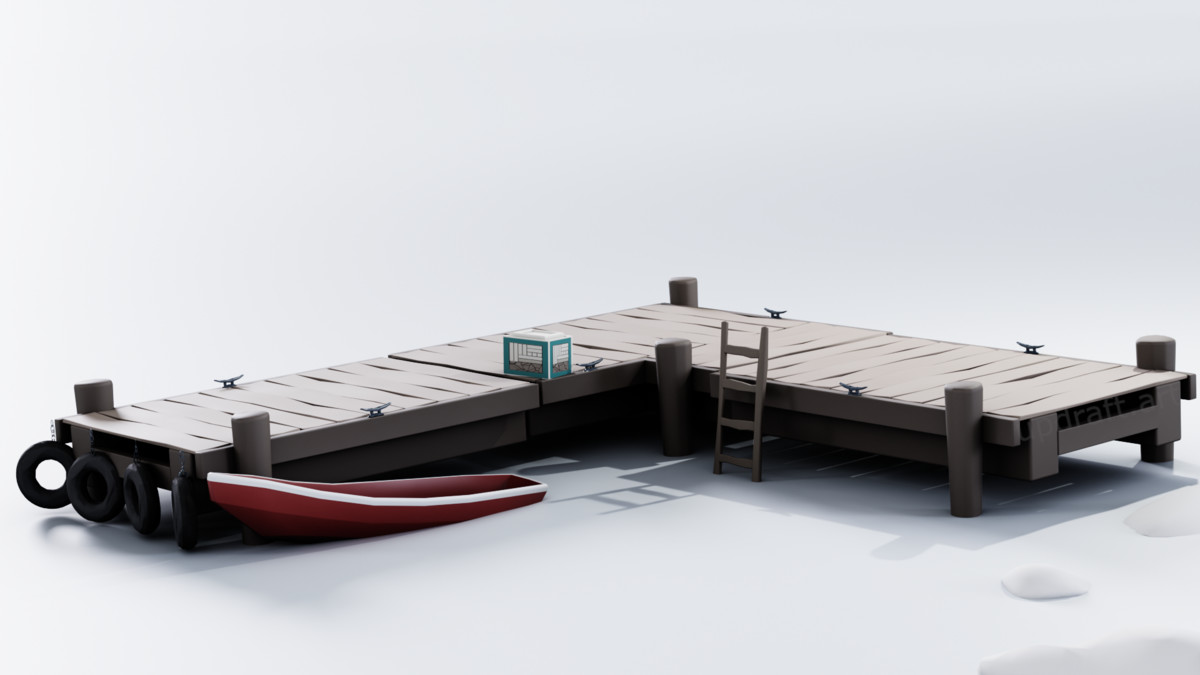
A forge should read as heat and tools. A bakery should read as display and stock. A dock should read as water access and repeated structure.
Use detail in clusters
Group small props around the places where activity happens instead of spreading one object into every gap.
Protect quiet areas
Simple walls, snow, dirt, water, and open floor are what let the detailed zones feel intentional.
Exterior silhouette
One landmark can organize an entire village view
You do not need a unique landmark every ten meters. Give the player a few strong references and let repeated modules connect them. This creates orientation without forcing signage or UI to solve the whole navigation problem.
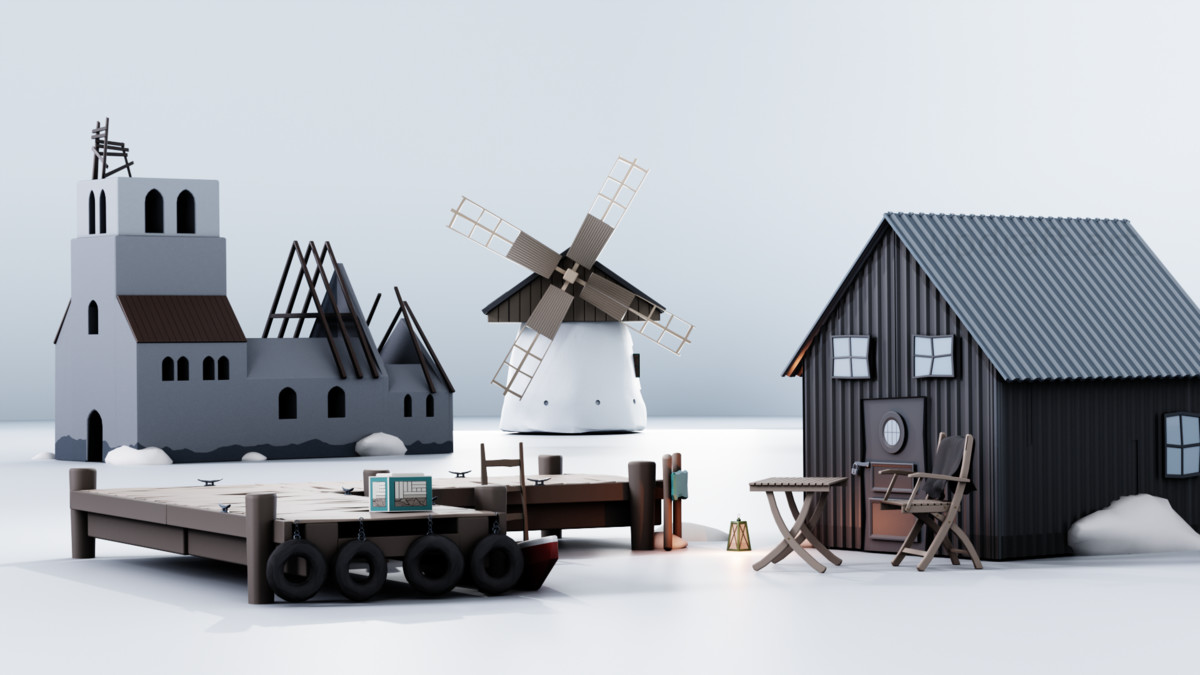
The windmill gives the coastal kit a tall, recognizable mass that separates from the lower dock and village shapes.
Interior density
A stylized room still needs a hierarchy of large, medium, and small forms
If all of the visual interest comes from tiny props, the room collapses at distance. Start with the bar, tables, shelves, hearth, or bed. Then use clutter to explain who uses those anchors and how.
Furniture establishes the usable zone. Bottles, mugs, candles, and decor finish the read instead of defining it from scratch.
Ground layer
Small natural props should reinforce route edges and anchors
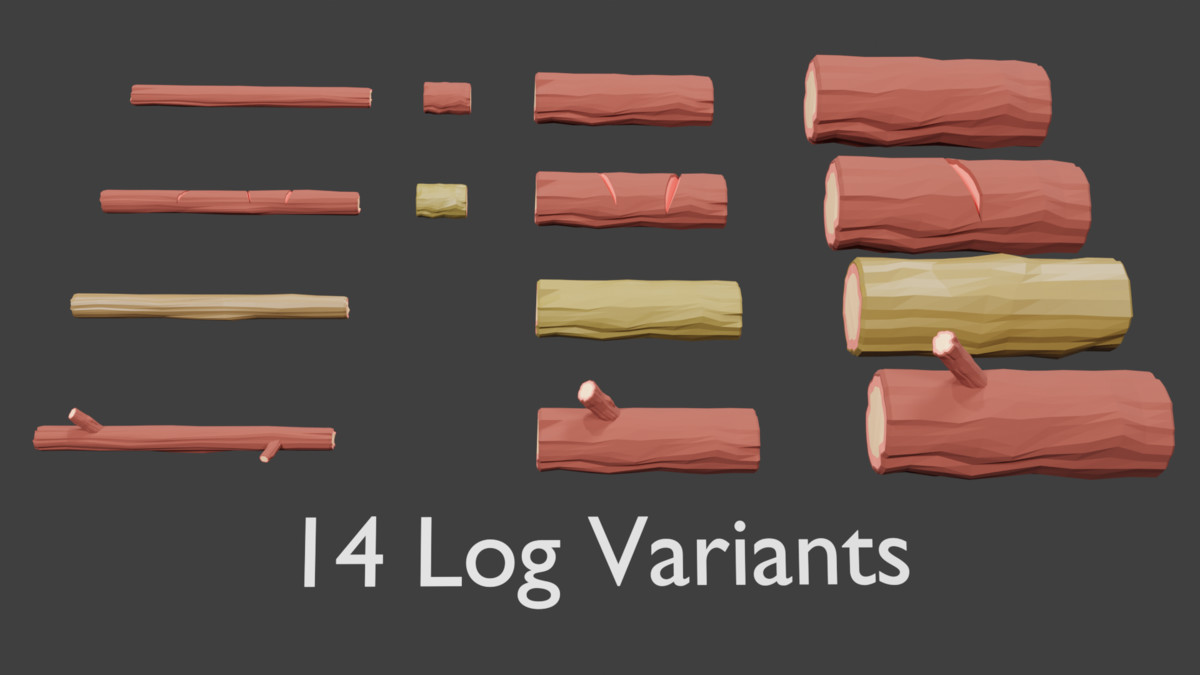
Low-poly ground clutter earns its place when it strengthens a bend, boundary, clearing, campsite, or transition. Random uniform scatter can make the scene noisier without making it more believable.
Forest-floor detail works best as punctuation around larger terrain and path decisions.
Build the style faster
Use compatible scene layers instead of modeling every category yourself
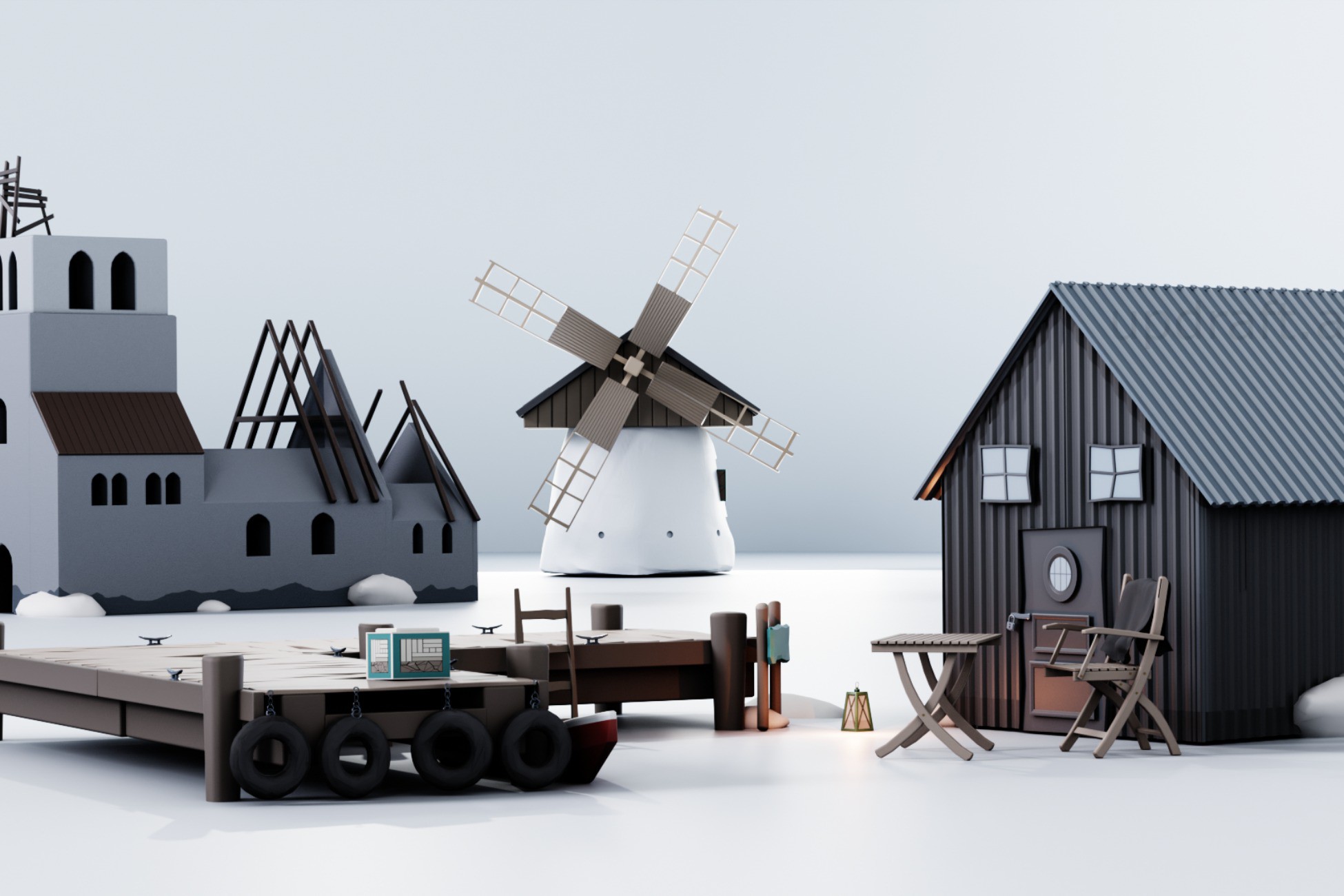
Stylized Viking Coast Village Kit
A compact exterior kit for shoreline silhouettes, modular docks, buildings, and a strong landmark.
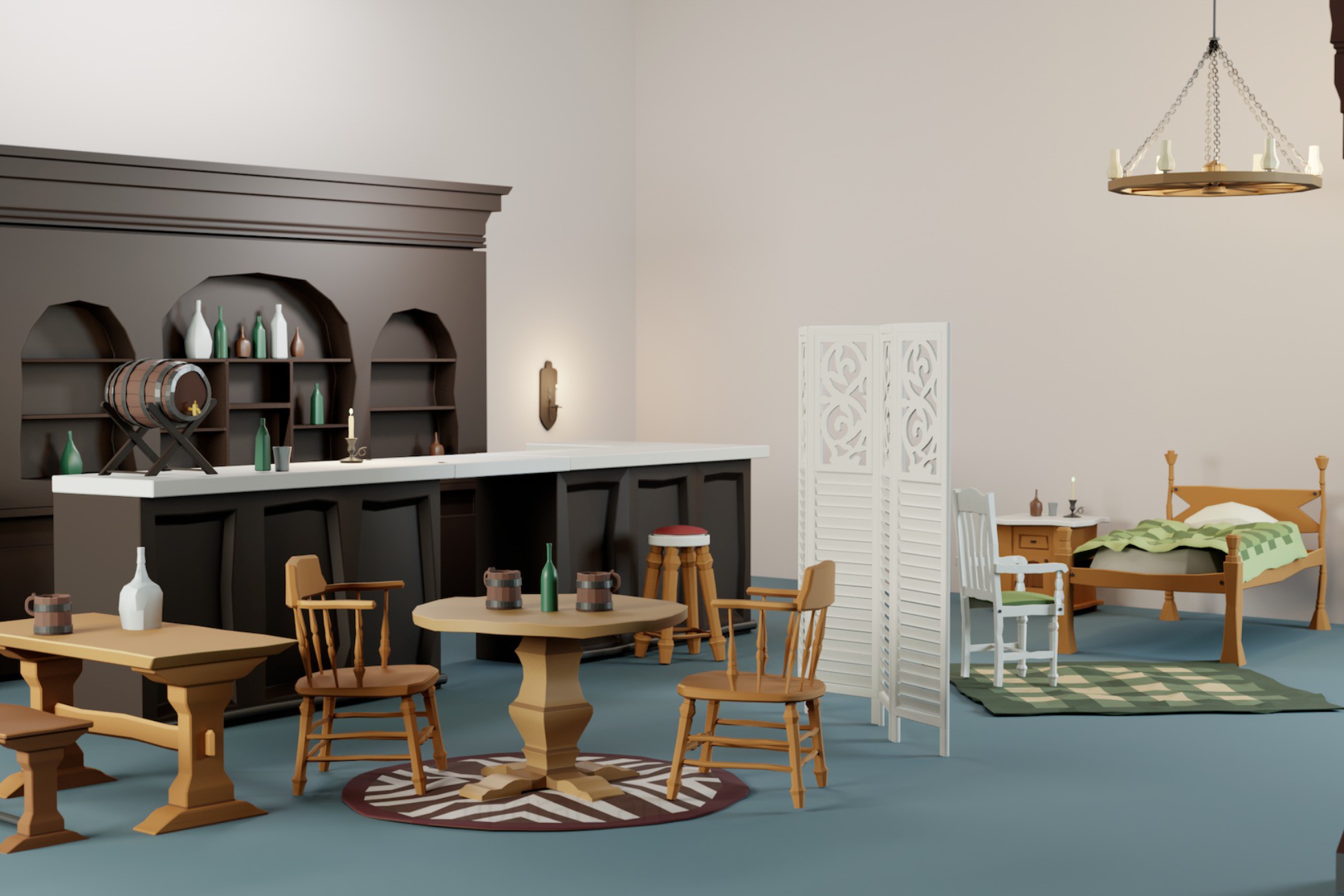
Stylized Tavern Props Pack
A dense interior layer for turning a simple room shell into a readable tavern or inn.
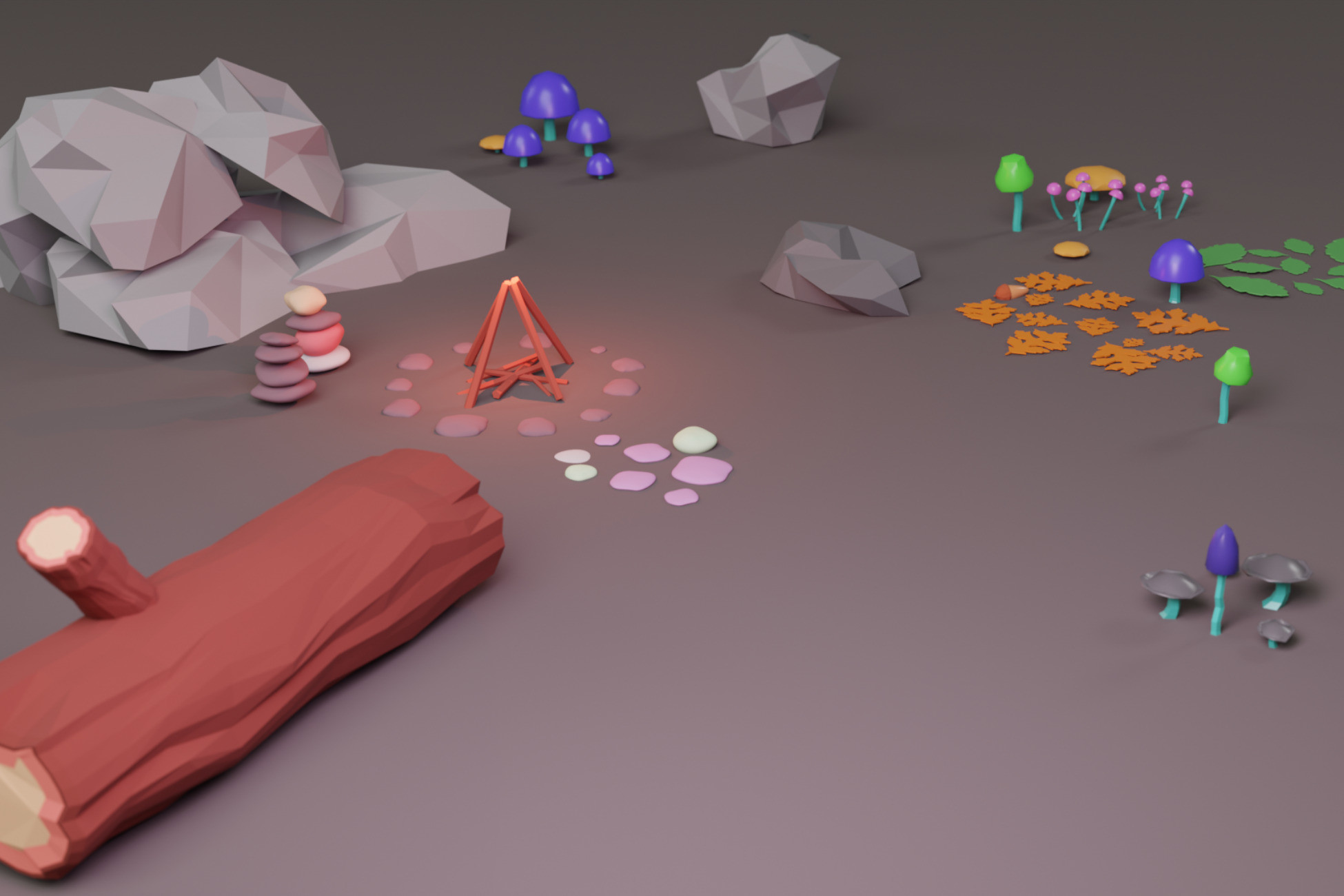
Stylized Forest Ground Clutter Pack
A small-scale natural-detail layer for paths, village edges, clearings, and transitions.