Prop reuse in Unity
Players notice repeated arrangements before they notice repeated meshes.
A small asset library can cover a large level when the context, grouping, density, and purpose of each reuse changes. Variation starts in composition, not in duplicate files.
The same rock can appear twenty times. The same rock cluster appearing twenty times is the problem.
Players are good at recognizing patterns. Break the pattern at the level of groups and relationships before reaching for more unique meshes.
This is useful for production speed, visual cohesion, and rendering discipline because the scene can stay inside a smaller vocabulary of meshes and materials.
Reuse system
Vary the relationship, not just the rotation
Rotation helps, but the bigger differences come from what surrounds the prop and why it is there.
Assign each reuse a different job
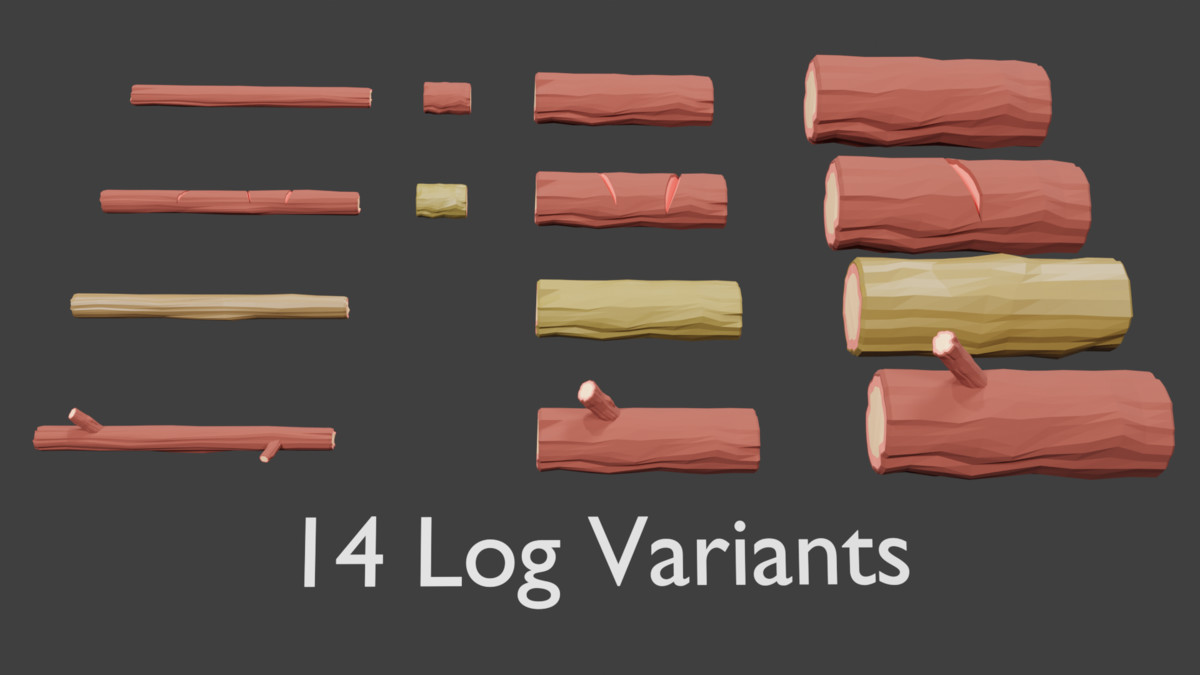
A log can block a path edge, mark a campsite, sit beside a stump, frame a clearing, or become background debris. The role changes how the player reads it.
Change group size and density
Use one prop alone in a quiet area, then combine it with several related pieces at a focal point. Do not repeat the same three-object cluster.
Change the anchor
Place repeated pieces beside different large forms such as a tree, building, shoreline, path corner, garden bed, or fence.
Use restrained transform variation
Small rotation and scale changes can break mechanical alignment, but extreme random scaling can destroy style and believable object relationships.
Keep a few signature props rare
Do not distribute every asset evenly. Let common background pieces repeat and save the most distinctive objects for memorable locations.
Natural scatter
Prebuilt clusters are starting points, not stamps
Use dense clusters where the environment needs emphasis, then let single stones, branches, or leaves carry the transition into quieter ground. This creates a rhythm of detail rather than a visible scatter grid.
Move, split, rotate, and recombine cluster pieces so a path edge does not repeat the same silhouette every few meters.
Plant reuse
The same flower reads differently in a bed, border, pot, and wild edge
Group plants by purpose. Formal beds can use repetition and spacing. Cottage edges can overlap species and height. A single plant beside a doorway can act as a local accent. The same library now supports several visual systems.
Context is often the cheapest form of variation because the mesh stays the same while the composition changes.
Built props
Repetition can become a visual language when the placement rules are consistent
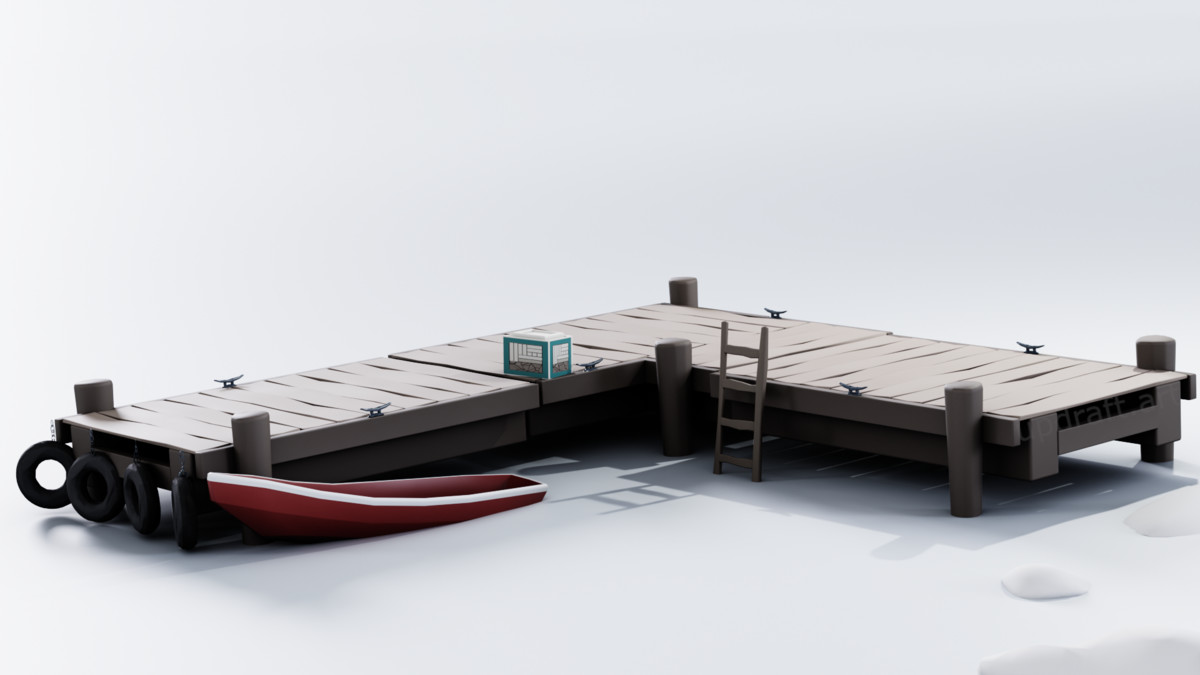
Some repetition should remain visible. Street signs, fence posts, dock modules, chairs, or market crates often need shared design. Hide repetition only when it makes the world look copy-pasted, not when it communicates that the objects belong to the same place.
Repeated sign shapes feel intentional when the text, location, mounting, and destination change.
Small libraries with leverage
Use compact packs across several scene roles
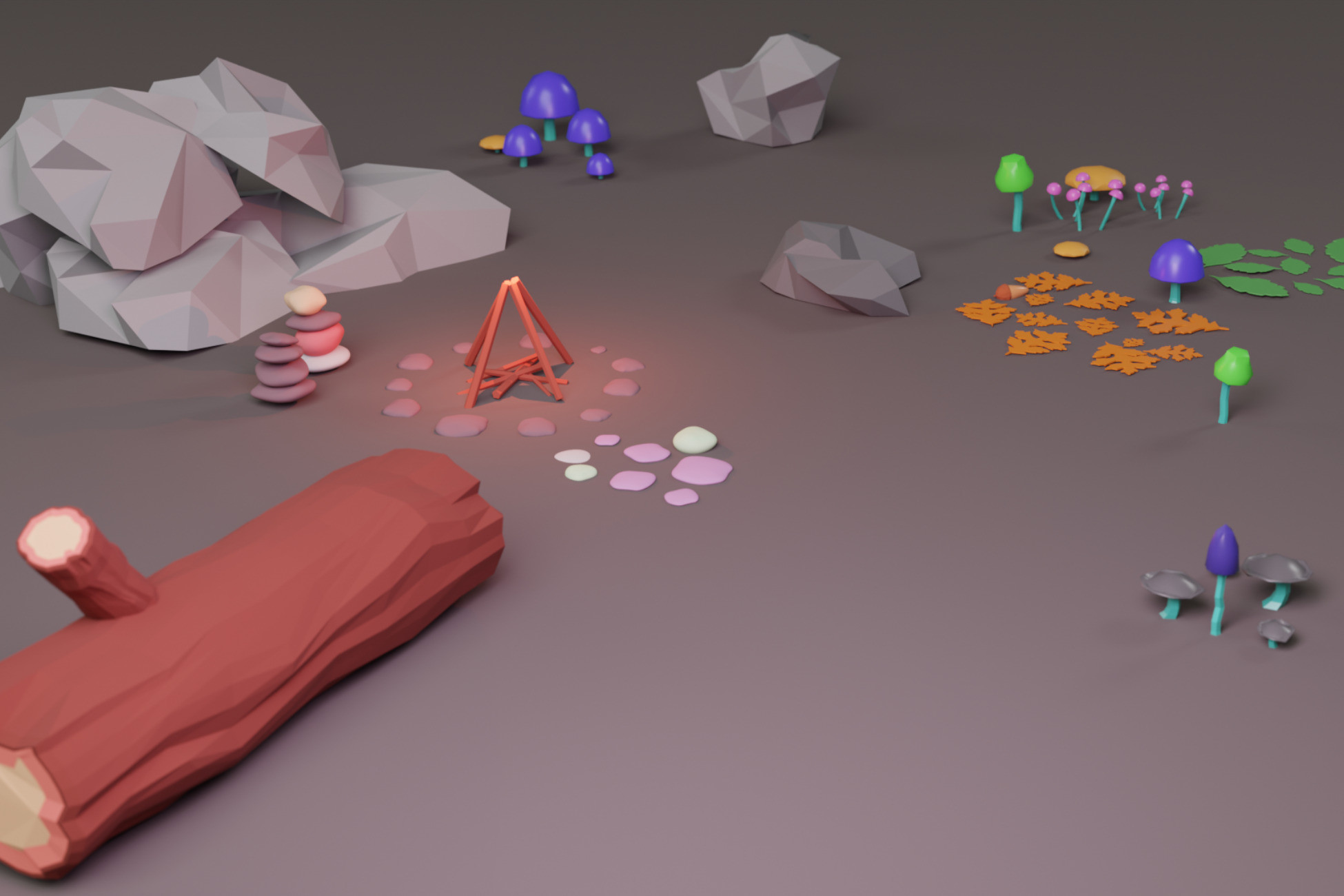
Stylized Forest Ground Clutter Pack
Forty-six meshes plus ready-made clusters that can be recombined across paths, clearings, campsites, and village edges.
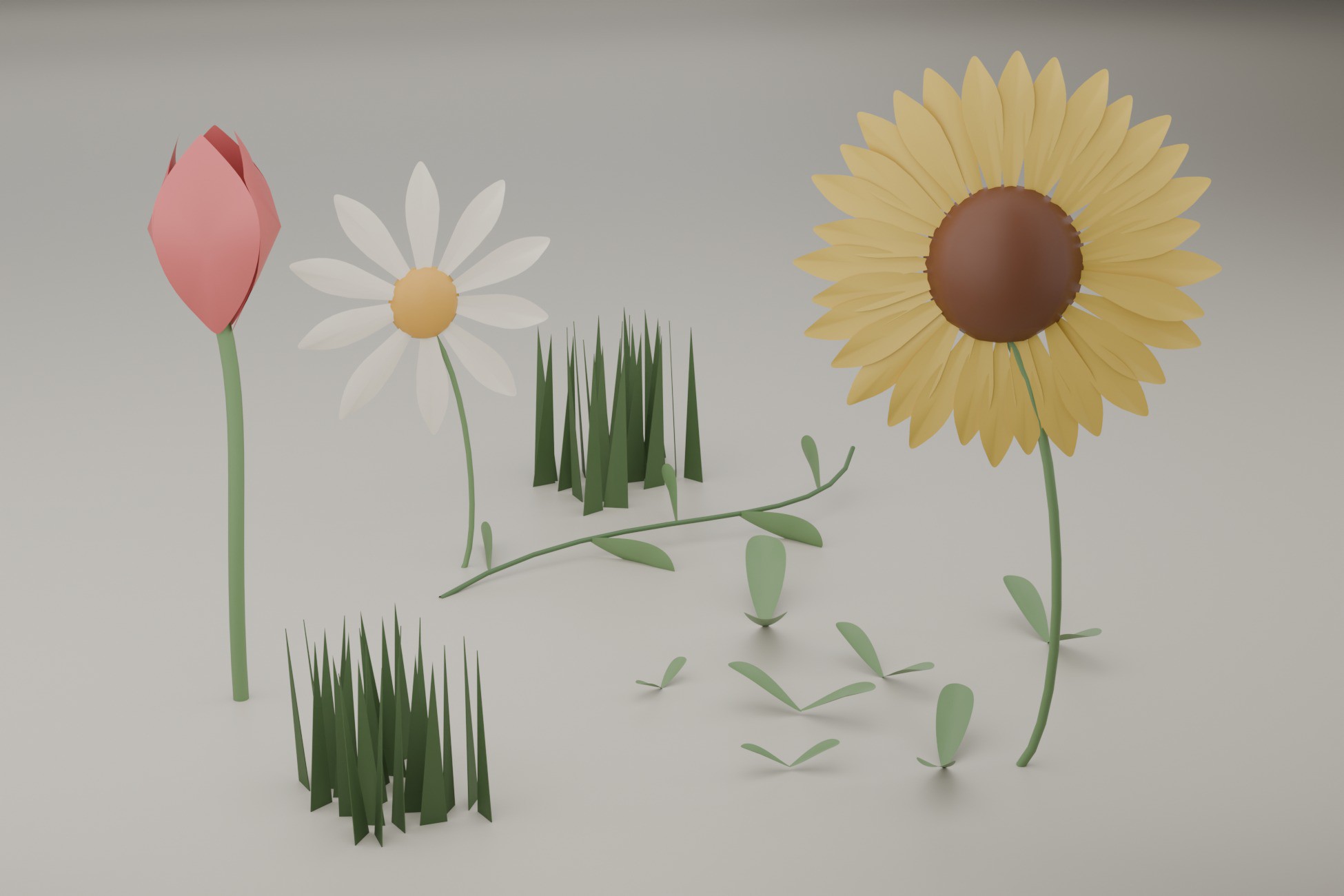
Stylized Garden Plants & Flowers - Cozy Greenhouse Add-On
A compact stylized plant layer that can move between garden beds, paths, cottage edges, and greenhouse scenes.
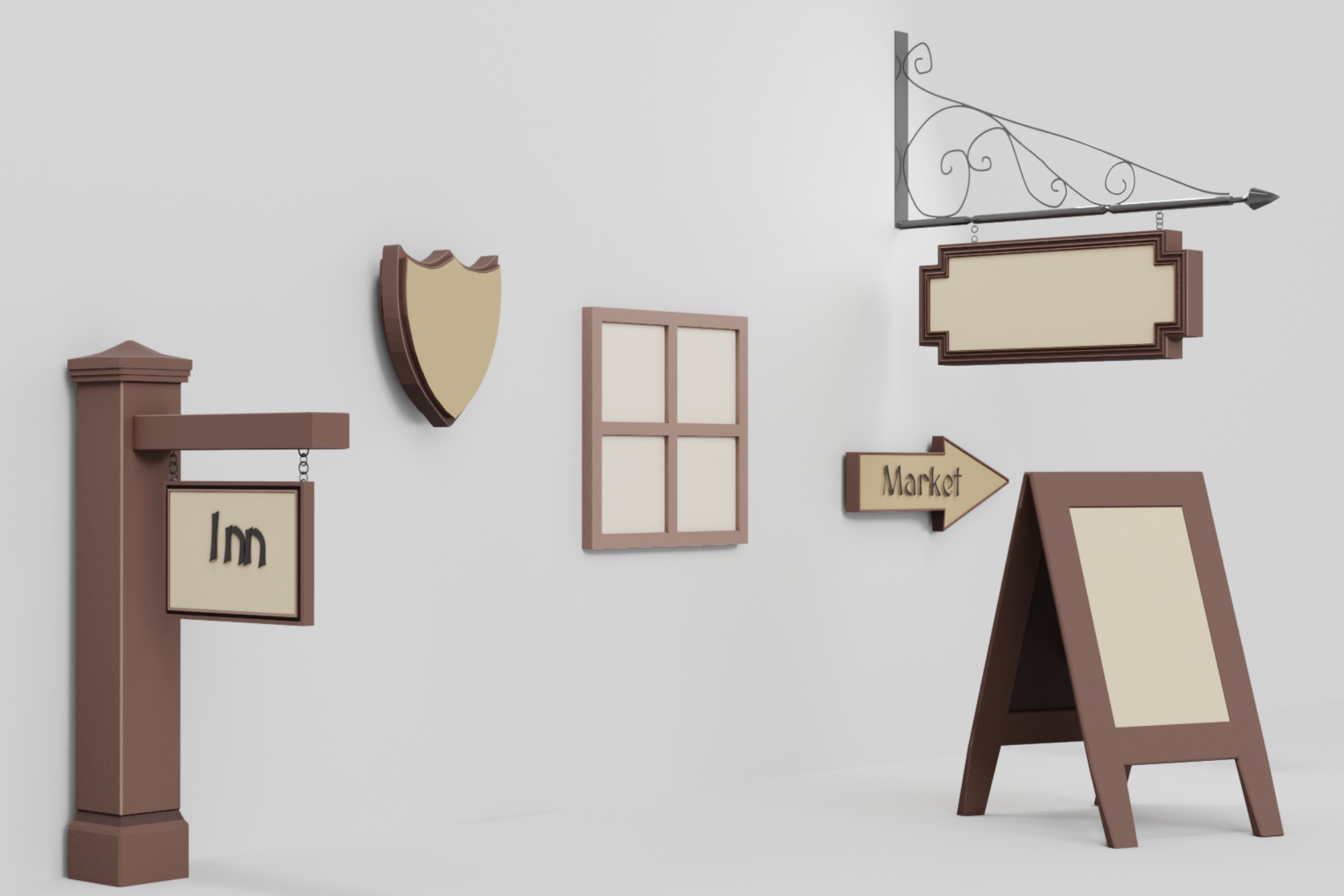
Stylized Medieval Signs & Notice Boards
Reusable signs and boards that gain identity from placement, destination, and surrounding architecture.