Modular Unity environments
A modular kit is a connection system, not a folder full of pieces.
Decide how pieces meet, where pivots live, what dimensions repeat, and which modules create variation. The kit becomes useful when new layouts are predictable to assemble.
The fastest way to make a modular kit frustrating is to model first and invent the rules later.
Start with the few relationships every piece must respect. Dock segments need shared connection widths. Bar counters need consistent heights and end conditions. Wall or fence modules need predictable lengths and corner logic.
Once those constraints are stable, extra variants become useful instead of creating more exceptions.
Kit planning
Define the grammar before the vocabulary
A small set of clean rules usually produces more usable combinations than a large set of unrelated modules.
Choose a base measurement
Pick the repeated width, height, or grid interval that controls the kit. Do not let every asset invent its own scale.
Put pivots where assembly happens
A pivot at a meaningful corner, centerline, or connection point makes snapping and rotation predictable.
Define straight, corner, end, and transition cases
These pieces solve most layout problems. Decorative variants should not be the only way to finish a run cleanly.
Separate structure from dressing
Keep the route or architectural system reusable. Add crates, signs, plants, furniture, and clutter as a second layer.
Build ugly test layouts
Try long runs, tight turns, uneven branches, dead ends, and awkward transitions before polishing the kit. Break the rules early while they are cheap to fix.
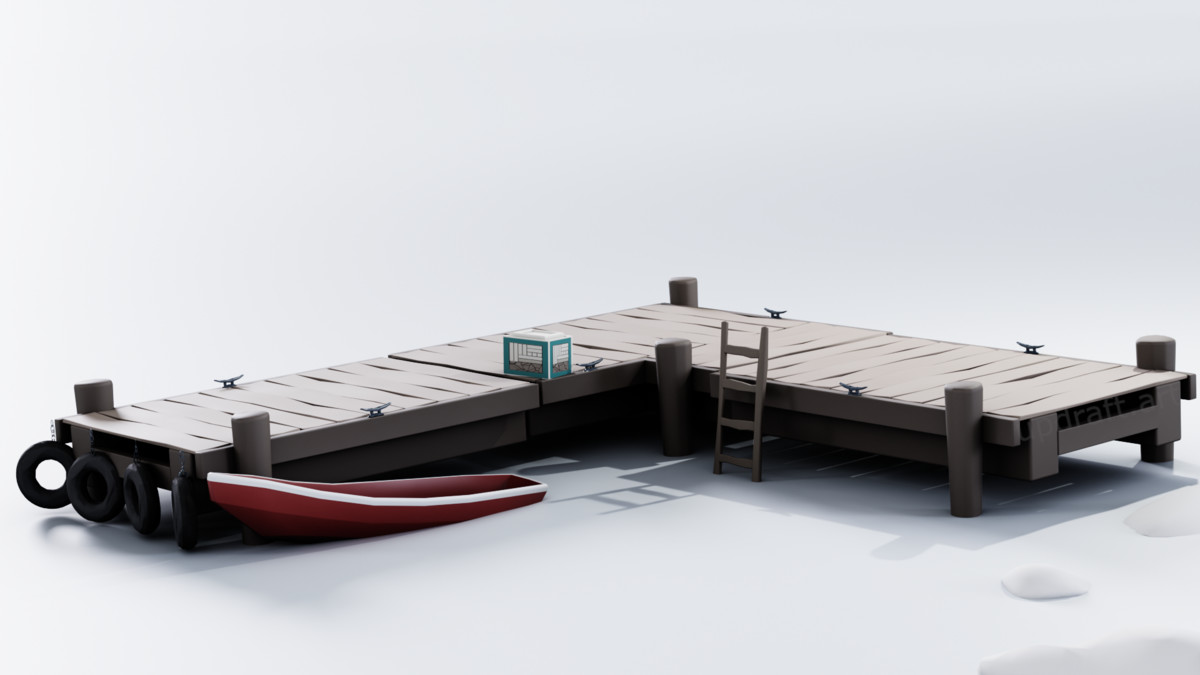
Dock system
Repeated structure can create different routes when the branch points change
Use straight pieces to establish rhythm, then create identity with corners, branch points, shore connections, boats, crates, buildings, and landmarks. The structural repetition becomes expected while the route remains varied.
A dock kit becomes flexible through clean connection logic, not through dozens of unique boards.
Interior modules
The same rule applies to a bar counter
Interior modularity is often smaller in scale but equally useful. Counter sections, shelving, dividers, benches, and repeated furniture sizes let you resize the room without rebuilding every asset around one layout.
Modular counter and backbar pieces define the working edge of the tavern before stools, bottles, and clutter finish the scene.
Ready-made modular layers
Start with systems that already have repeatable pieces
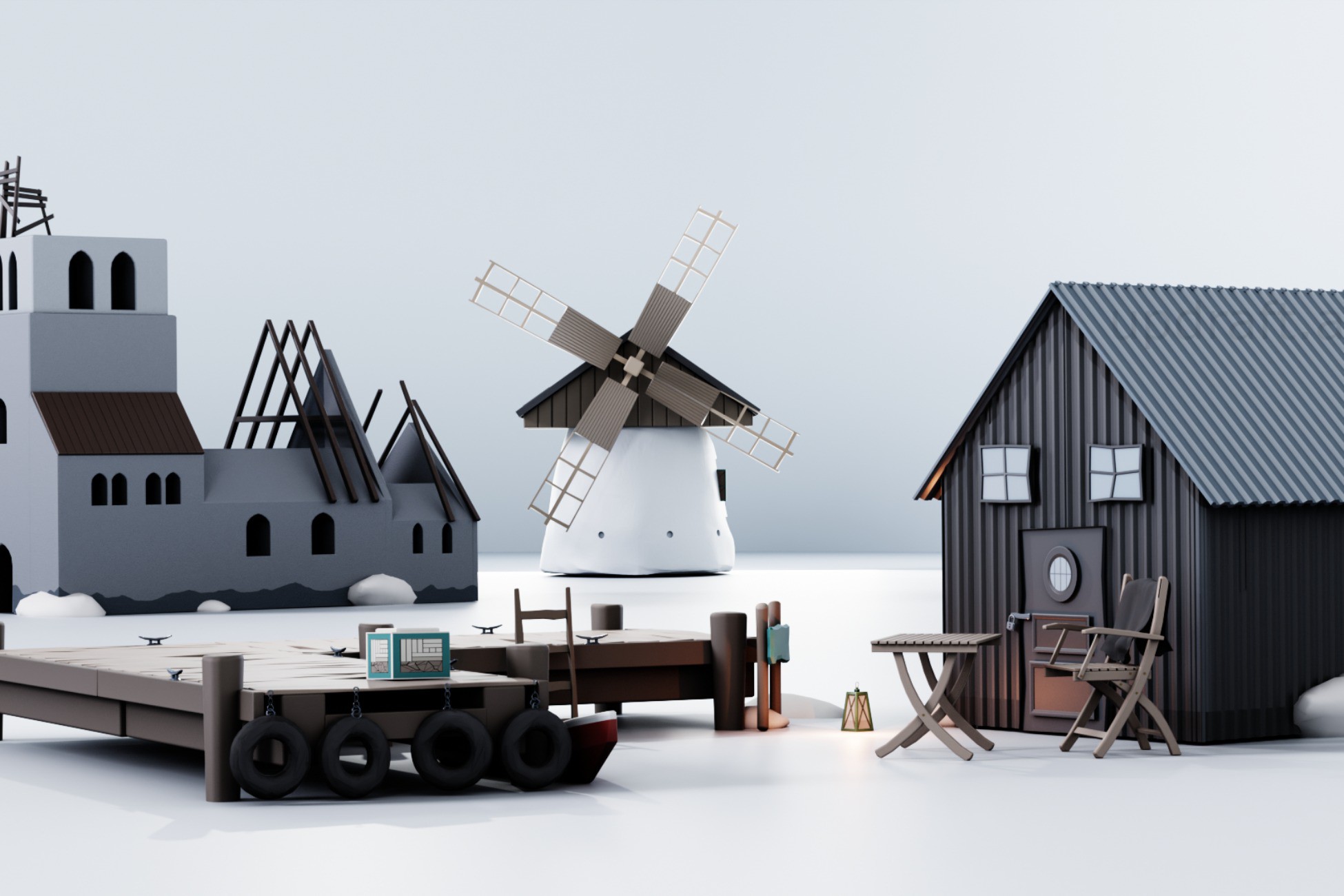
Stylized Viking Coast Village Kit
Modular dock pieces plus assembled village prefabs for testing multiple shoreline layouts quickly.
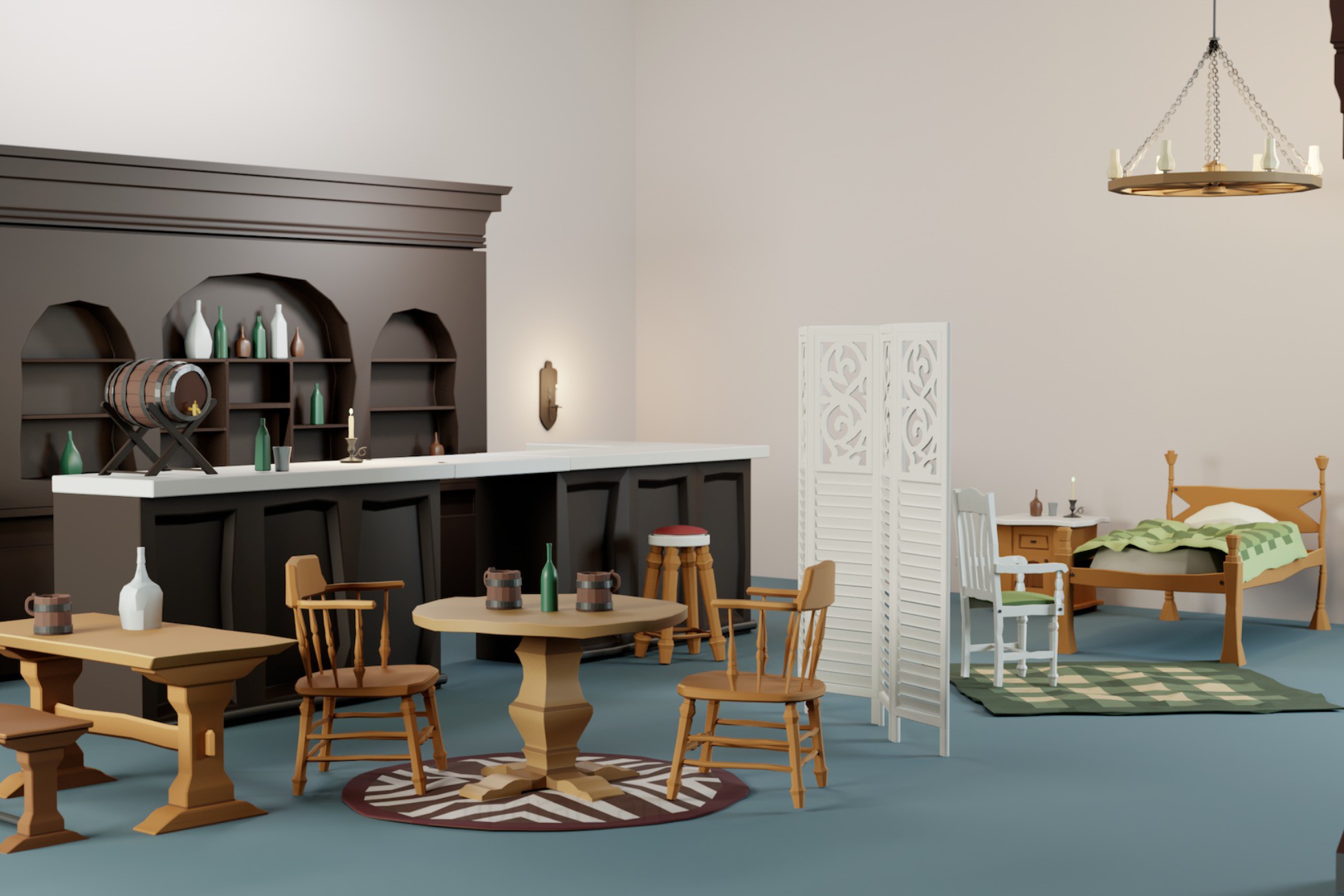
Stylized Tavern Props Pack
Modular bar and backbar pieces for resizing a tavern service area without remodeling the set.
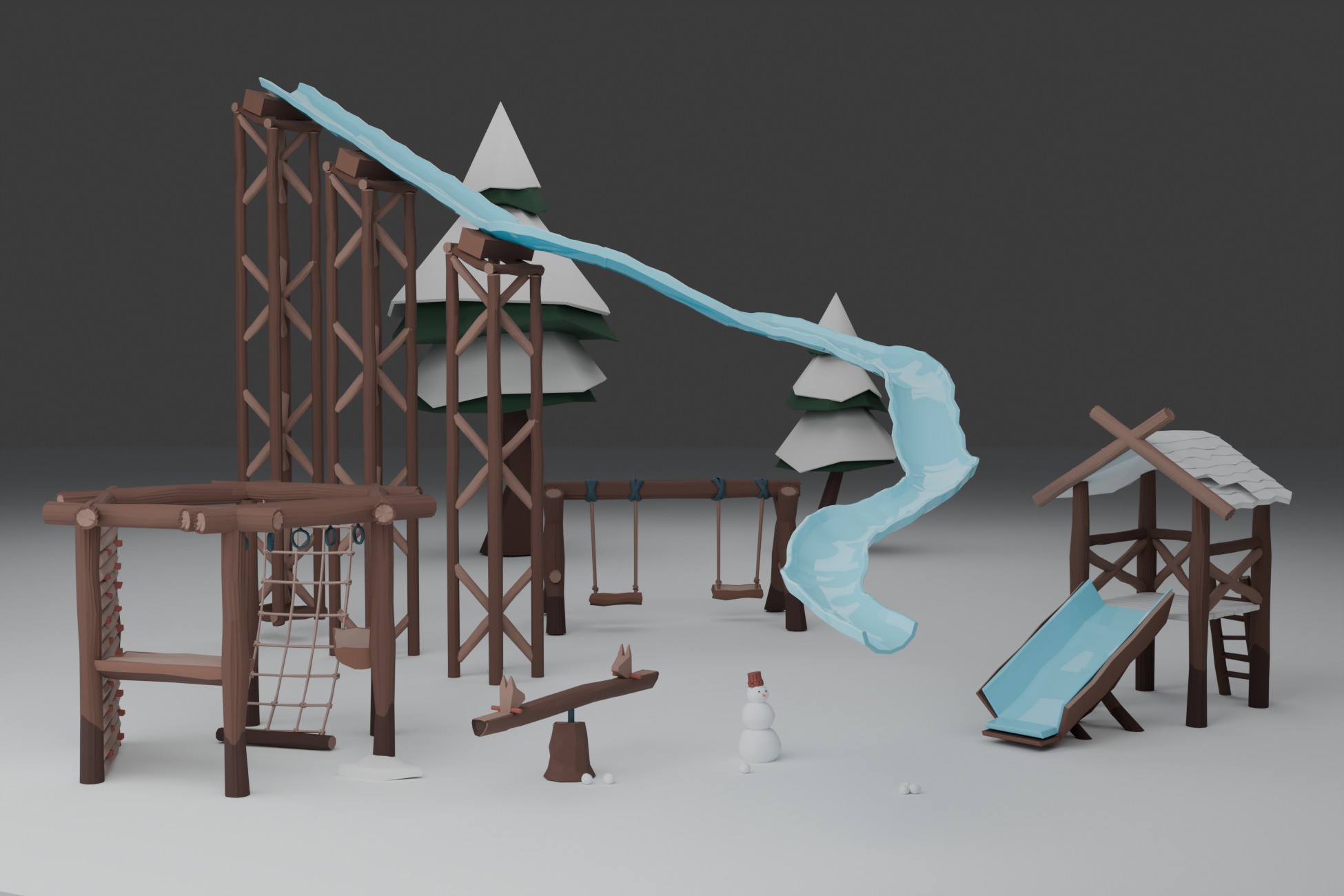
Stylized Winter Playground Pack
Repeatable ice-rink and slide modules for assembling winter activity routes from a compact kit.