Unity path set dressing
Dress the edges. Keep the route clean.
A forest path should feel embedded in the environment without becoming hard to read. Use clutter to frame movement, mark turns, and support destinations instead of covering the trail.
The path itself is the least interesting place to put forest clutter.
Keep the center relatively quiet. Use rocks, fallen wood, leaves, mushrooms, and branches along the edges where they can define the corridor without competing with it.
Then increase detail at bends, intersections, and the approach to important spaces. Those are the places where the player is already looking for information.
Route-first workflow
Use detail to support navigation
Every clutter pass should make the route clearer or the place more specific.
Draw the path cleanly
Get width, curves, slope, and destination sightlines working before any small scatter goes in.
Frame the shoulders
Place medium clutter just outside the walking line so the trail reads as a corridor through the environment.
Mark decisions
Use a log, larger rock, or denser patch near bends and forks so the route changes feel intentional.
Open up near destinations
Reduce clutter as the path reaches a clearing, campsite, gate, or building so the arrival space can breathe.
Path shoulders
Build a soft boundary instead of a hard line
Use low pieces near the walking line and save taller logs or rocks for farther outside the corridor. The player gets texture at the edge without losing the open strip that signals movement.
Ground scatter can soften the path edge while preserving the route.
Bends and forks
Spend your strongest props where the route changes
When the player has to choose or reorient, give the eye something memorable. A stump, fallen log, mushroom group, or rock patch can become a small local landmark without adding a UI marker.
A denser cluster near a turn can make the route change feel authored rather than accidental.
Skip the prop-modeling stage
Stylized Forest Ground Clutter Pack
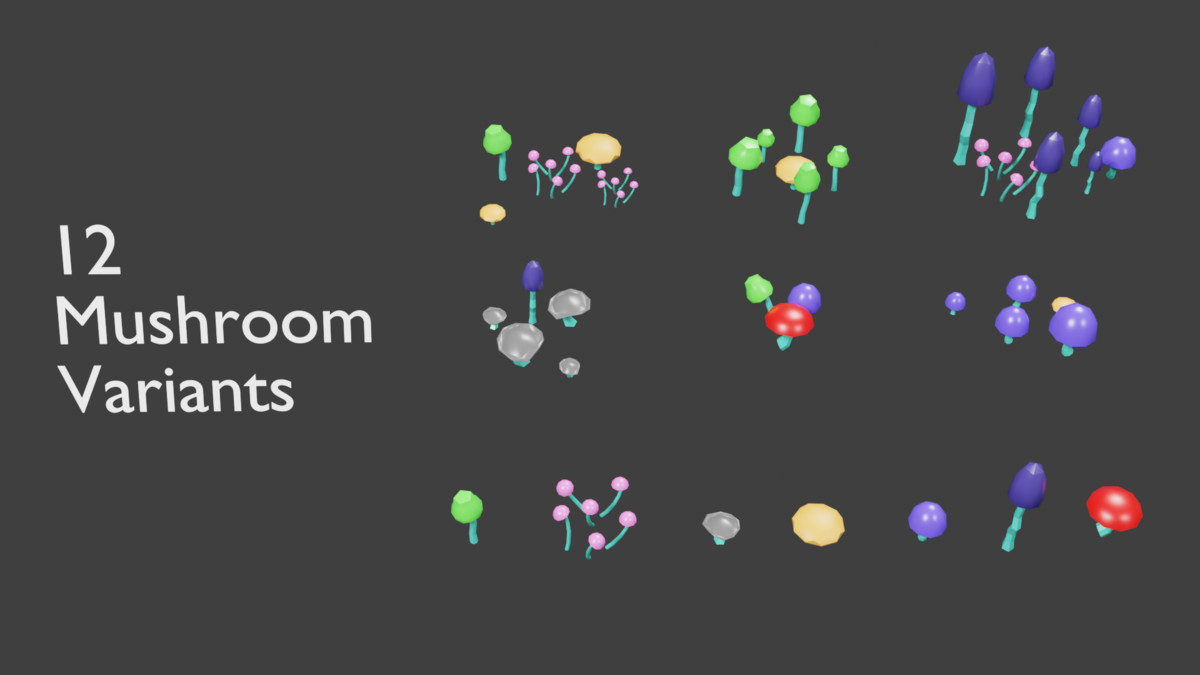
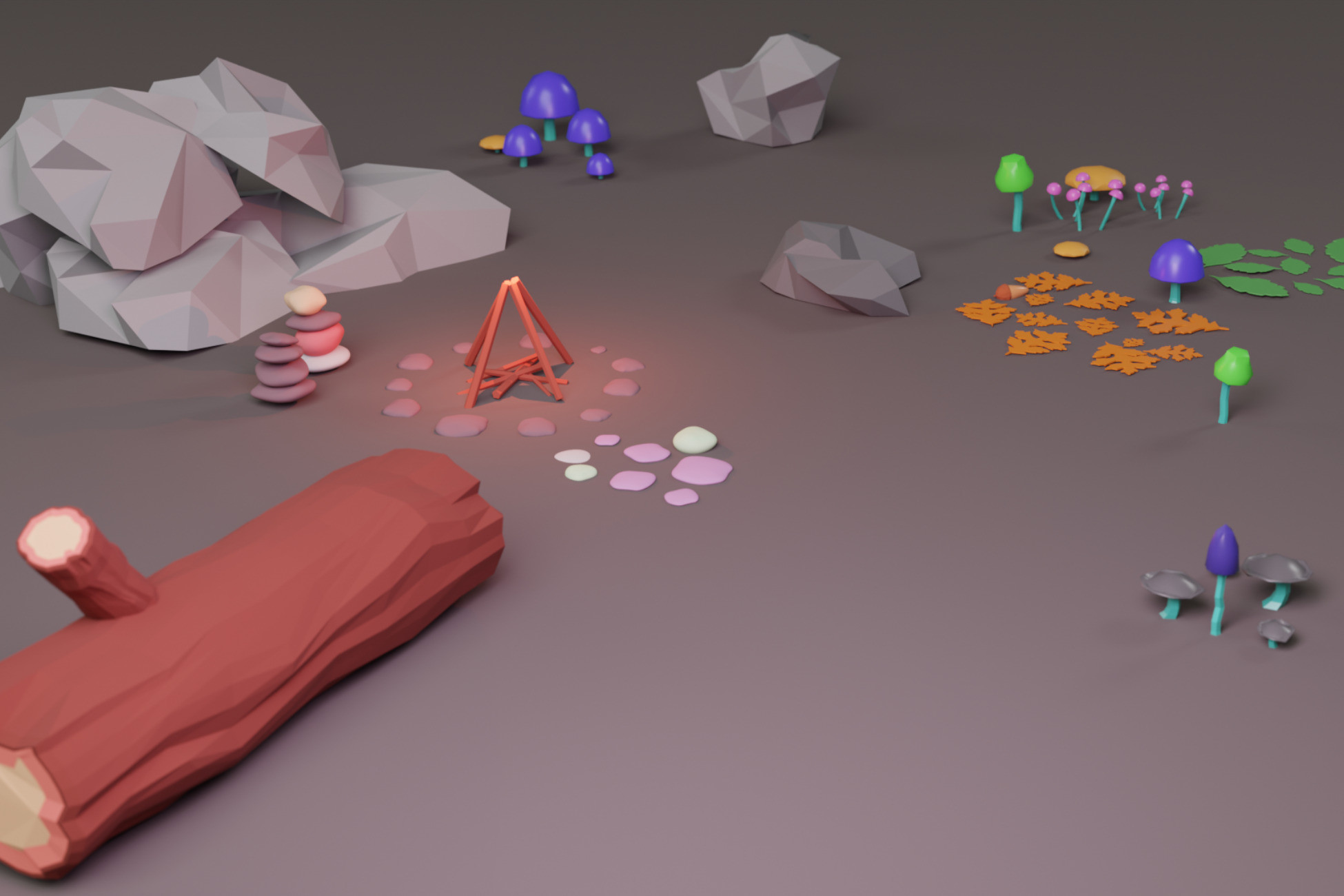
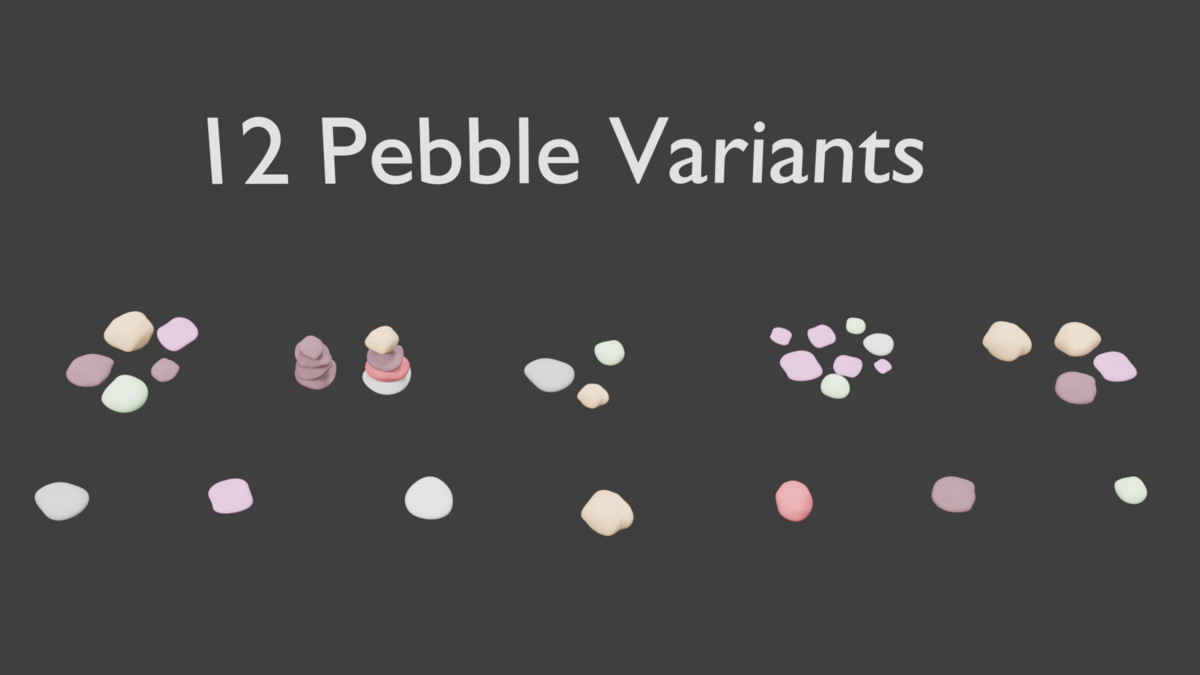
The pack gives you a fast edge-dressing vocabulary: larger logs and rocks for route markers, clusters for coverage, and small leaves, pebbles, twigs, and mushrooms for the final pass.
- 46 stylized forest-floor meshes
- 20 ready-made clusters for faster dressing
- Rocks, pebbles, logs, stumps, branches, sticks, and twigs
- Leaves, mushrooms, shells, acorn, and small ground accents
- Single pieces plus grouped patches for different placement scales