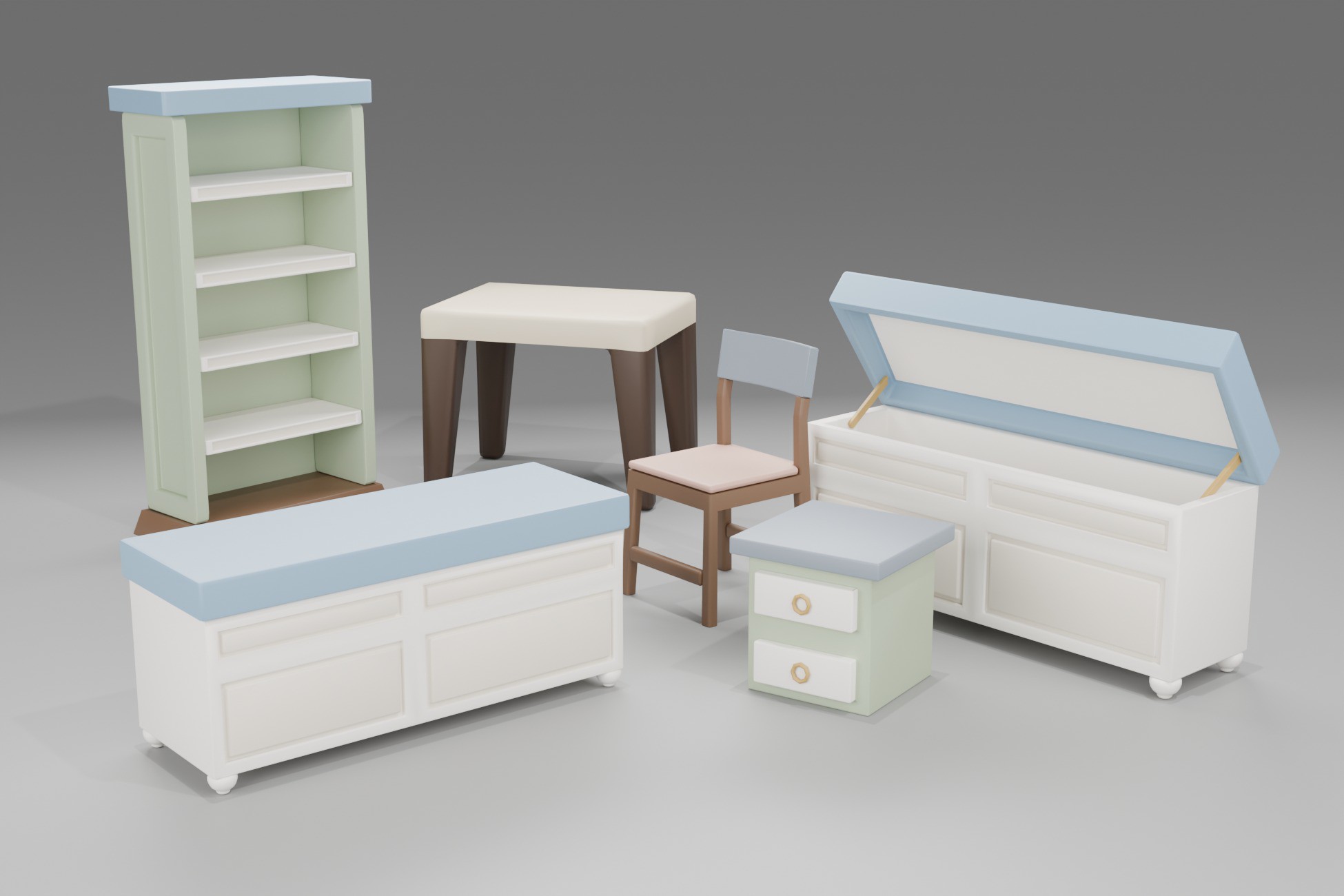
Unity environment set dressing
Do not fill the empty space. Give it structure.
A scene usually looks empty because the focal points, functional clusters, and transitions are weak, not because the prop count is too low.
Adding more objects is not the same as adding more information.
An empty scene often has large assets but no middle layer. The building exists, the terrain exists, and the furniture exists, but there are no groups that explain how the space is used or where the eye should stop.
Fix that hierarchy first. Then add only the props that support it.
Set-dressing pass
Use four questions before adding another prop
If a new object does not answer one of these questions, it may just be filling space.
What is the focal point?
Pick the bar, fireplace, workstation, garden bed, path turn, or other element that should own the local view.
What happens here?
Group props that explain the activity, such as mugs at a bar, tools at a forge, or watering gear beside planters.
Where are the transitions?
Add smaller detail where floor meets furniture, path meets forest, garden meets wall, or one zone changes into another.
Where should nothing happen?
Protect open floor, clean paths, blank walls, and quiet terrain so the detailed areas have contrast.
Outdoor scenes
Use small ground detail to connect the large environment shapes
For a forest or village edge, the missing layer is often close to the ground. Add clusters around path shoulders, roots, rocks, campsites, and boundary changes. Leave the broad open terrain alone until those important edges read.
Logs, rocks, leaves, branches, and mushrooms are most useful around transitions and anchors, not spread uniformly.
Functional corners
A small prop group can explain an entire area
Indoor and outdoor workspaces benefit from the same logic. Put the watering can, seed tray, trowel, and pots together and the corner becomes a gardening station. Spread them across the level and they become decoration.
Tools and containers feel richer when they form one readable task cluster.
Interior hierarchy
Furniture should create zones, not line the walls
For interiors, stop placing one object against every wall. Build a reading corner, bedside area, storage wall, or service zone, then leave a visible route between them. The empty floor becomes part of the composition.
A bookshelf, chair, table, and storage piece can define a room when they are grouped around use.