Medieval RPG asset planning
Buy for the destinations the player will remember
A hub gets value from recognizable places, not sheer prop count. Start with the tavern, forge, shop, or other destination that owns the most play time, then add the supporting layers around it.
Purchase order
Spend production budget where the player spends attention
First
The primary social or quest space
If the tavern is where dialogue, rest, trading, or quest handoff happens, make that destination convincing before decorating side streets.
Second
One or two functional shops
A forge and bakery create strong visual contrast because their prop vocabulary immediately communicates different work.
Third
Wayfinding and connective dressing
Signs, notice boards, street props, and repeated clutter make separate destinations feel like one place.
Different jobs need different silhouettes
Let the forge, bakery, and tavern advertise themselves before the player reads a sign
Strong destination identity reduces the amount of explanation your UI has to do. The player can learn the hub by visual language first, then signs reinforce what they already understand.
Tools and workstations communicate a forge at a glance, while food display and prep props do the same job for a bakery.
Build a compact hub
Three packs can cover three high-value destinations
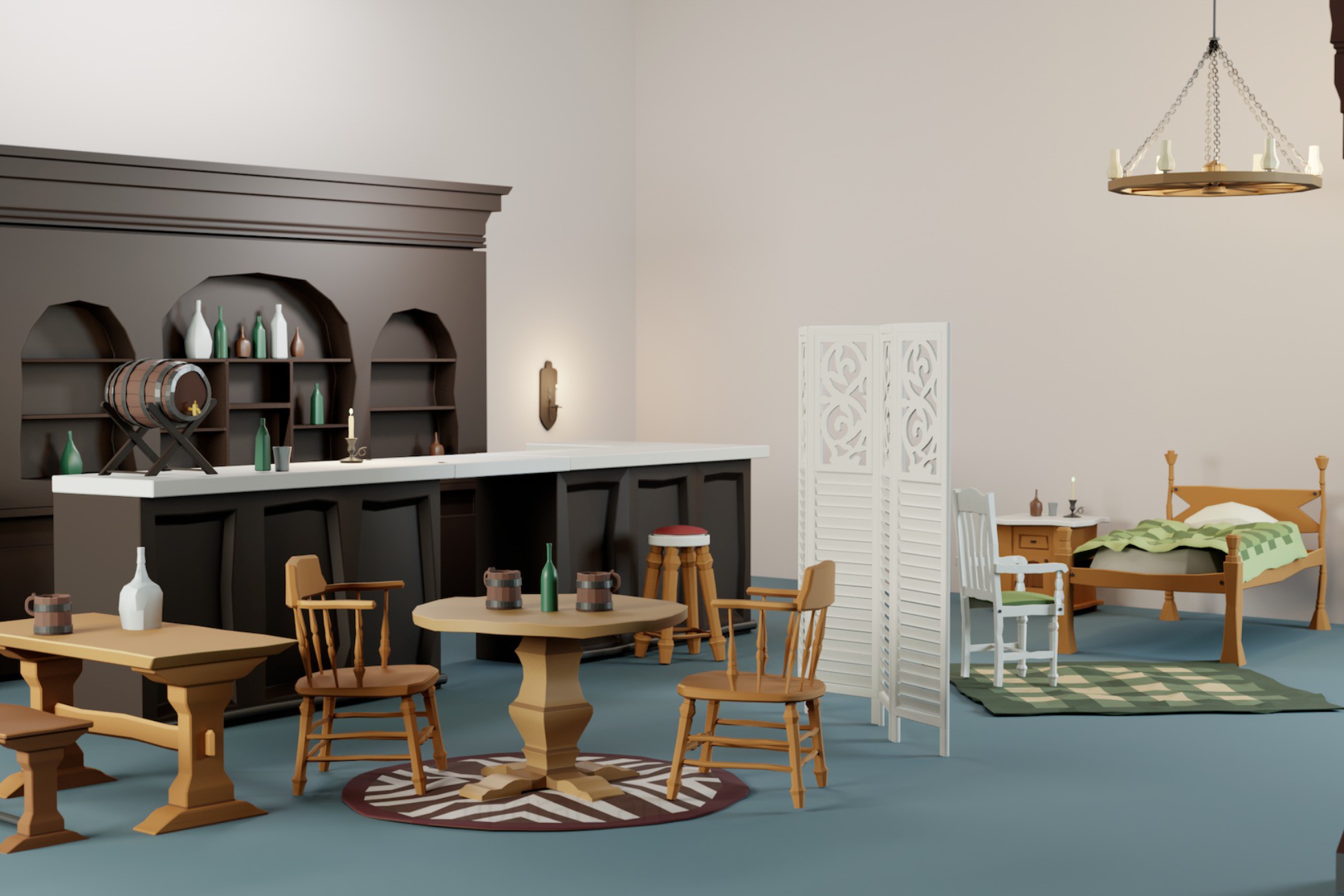
Stylized Tavern Props Pack
Use for the social hub, inn, quest room, or primary interior destination.
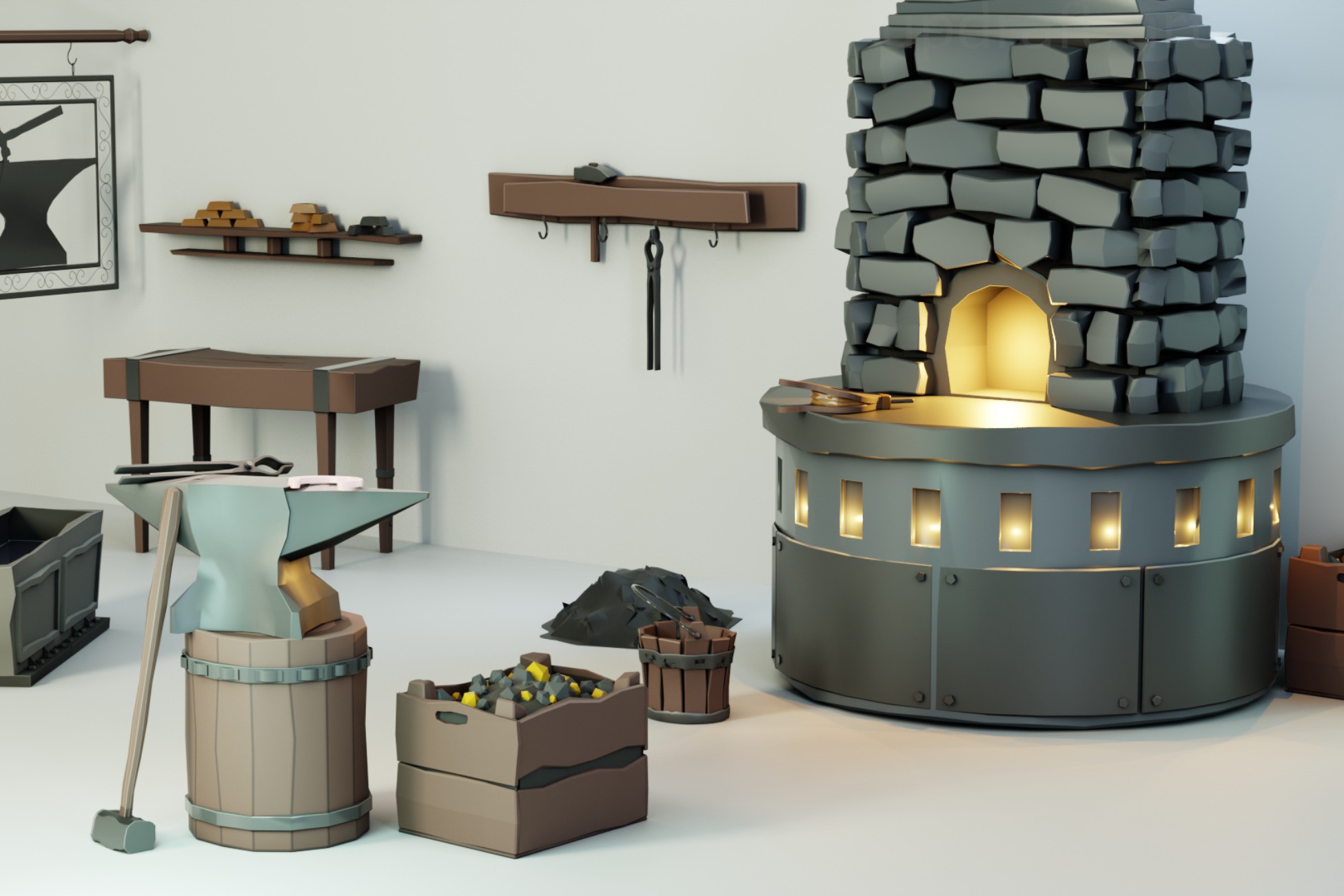
Stylized Blacksmith Props Pack
Use for a crafting or equipment destination with a distinct workshop identity.
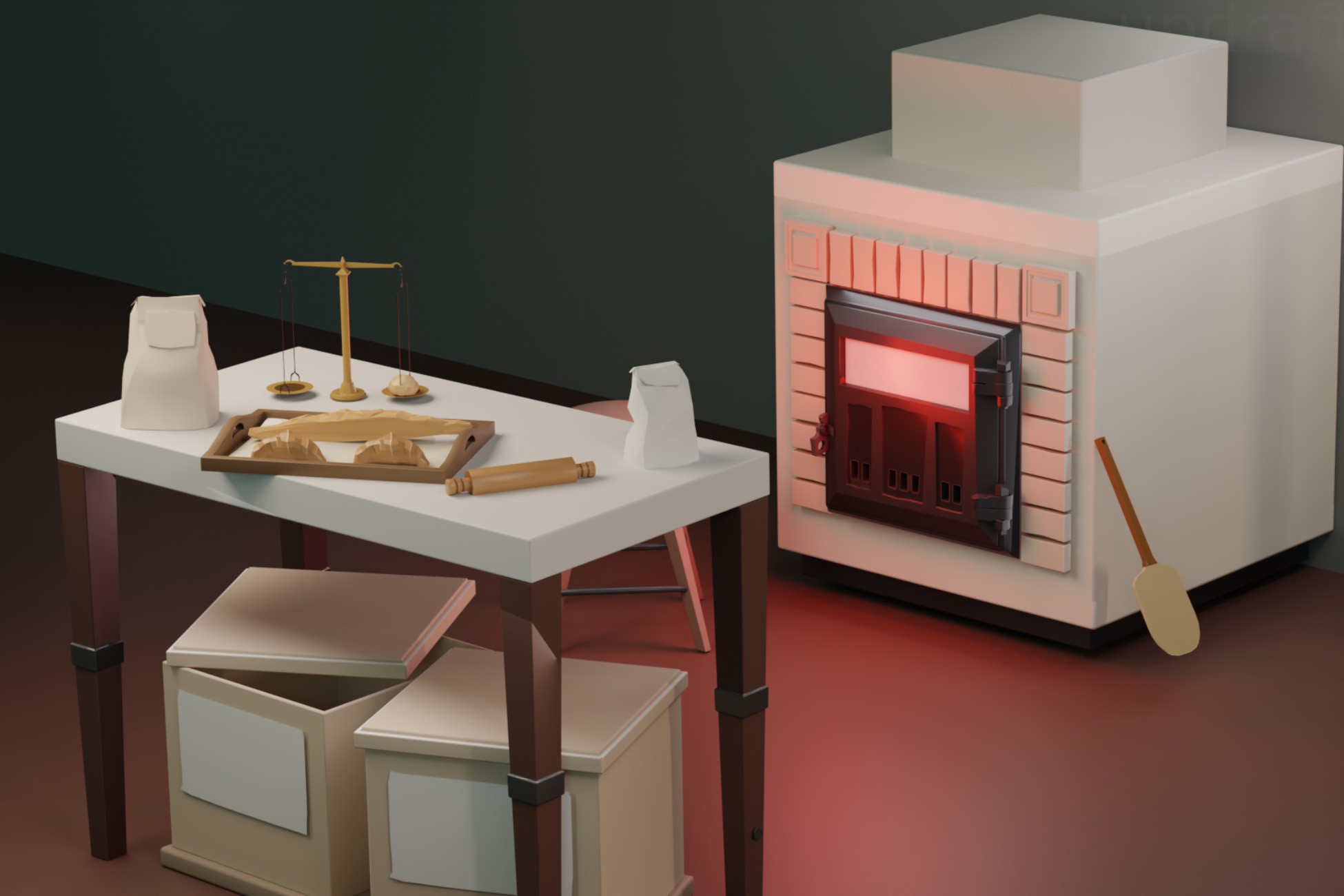
Stylized Bakery Props – Bread, Pastry & Medieval Shop Assets
Use for a food shop, market destination, or cozy commercial interior.