Fantasy crafting district assets
Give every workshop a different job before you give it more props
A forge, bakery, and kitchen should not read as three generic medieval rooms. The fastest route to a convincing district is a separate prop vocabulary for each trade, tied together by shared signs and street treatment.
Split the production backlog
Each destination needs evidence of a different process
Forge
Heat, shaping, grinding, storage
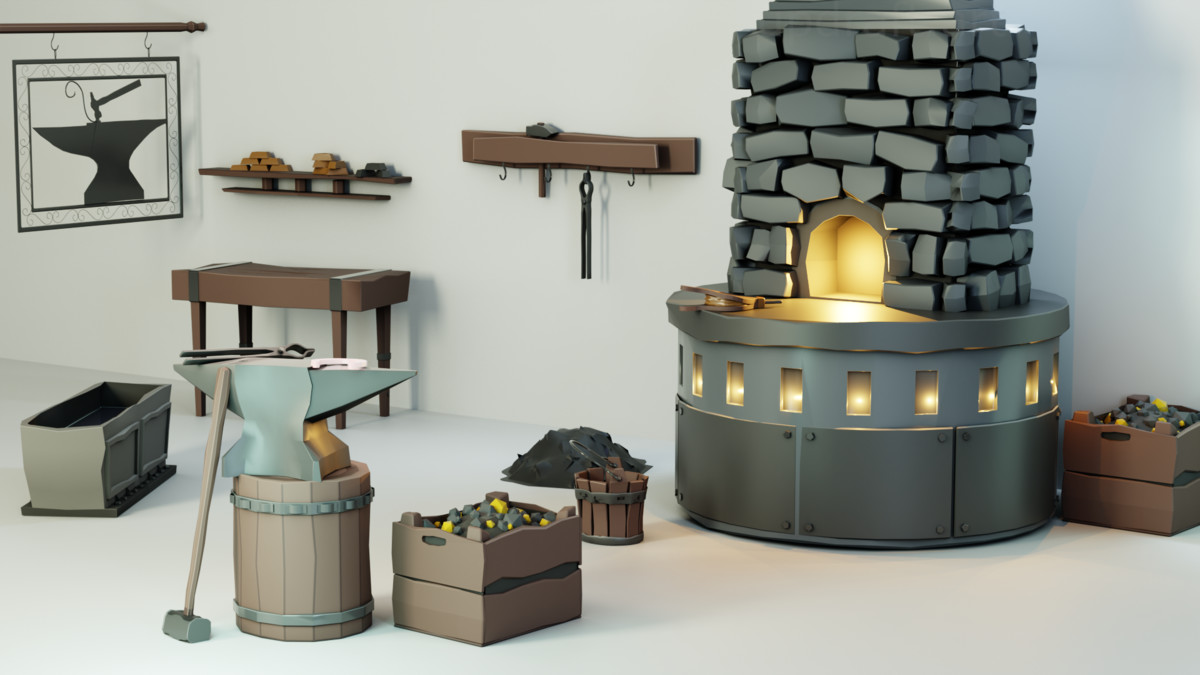
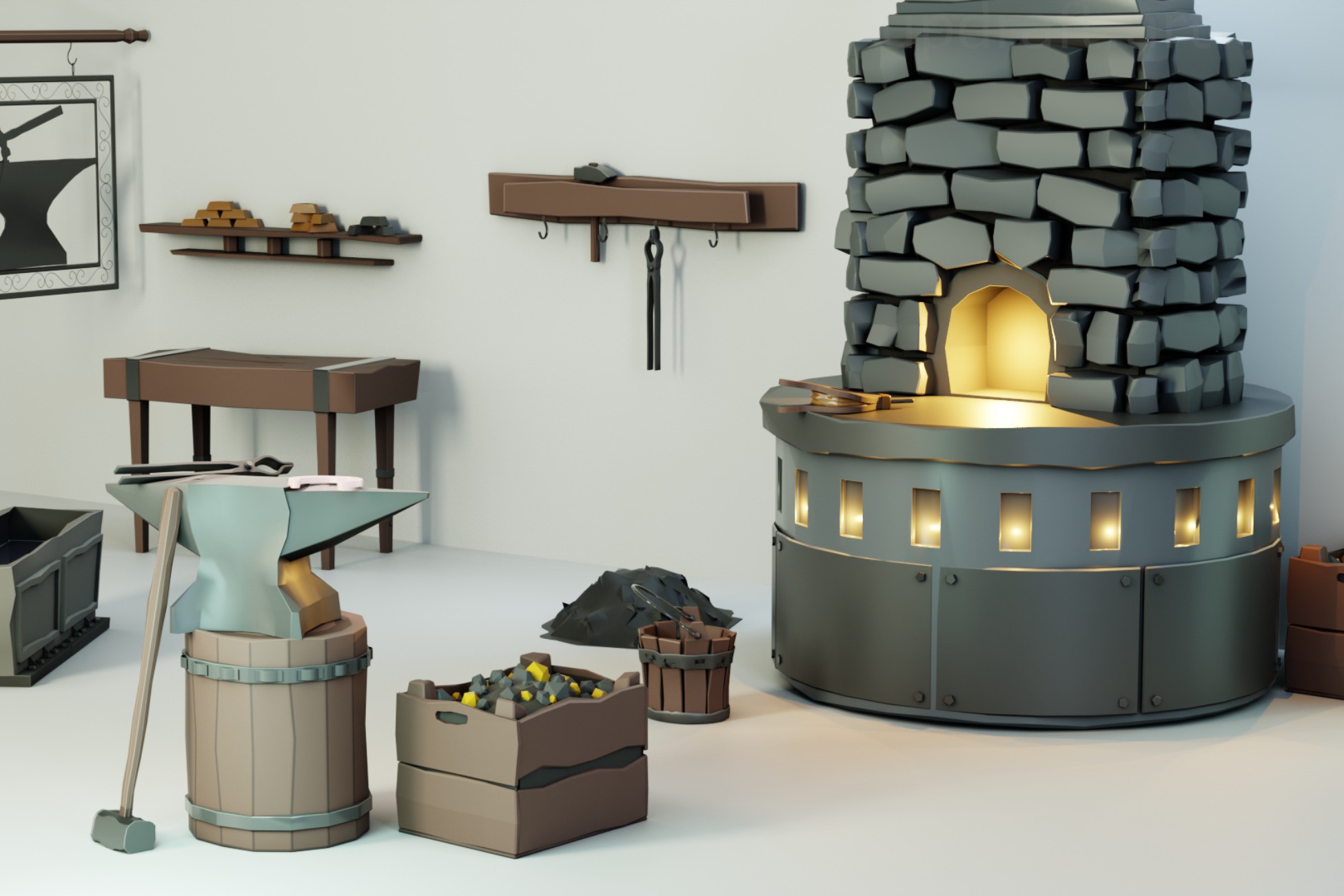
The workshop should make metalwork obvious before the player reads a label. The station, tools, and supporting props carry the identity.
Bakery
Preparation, display, stock, service
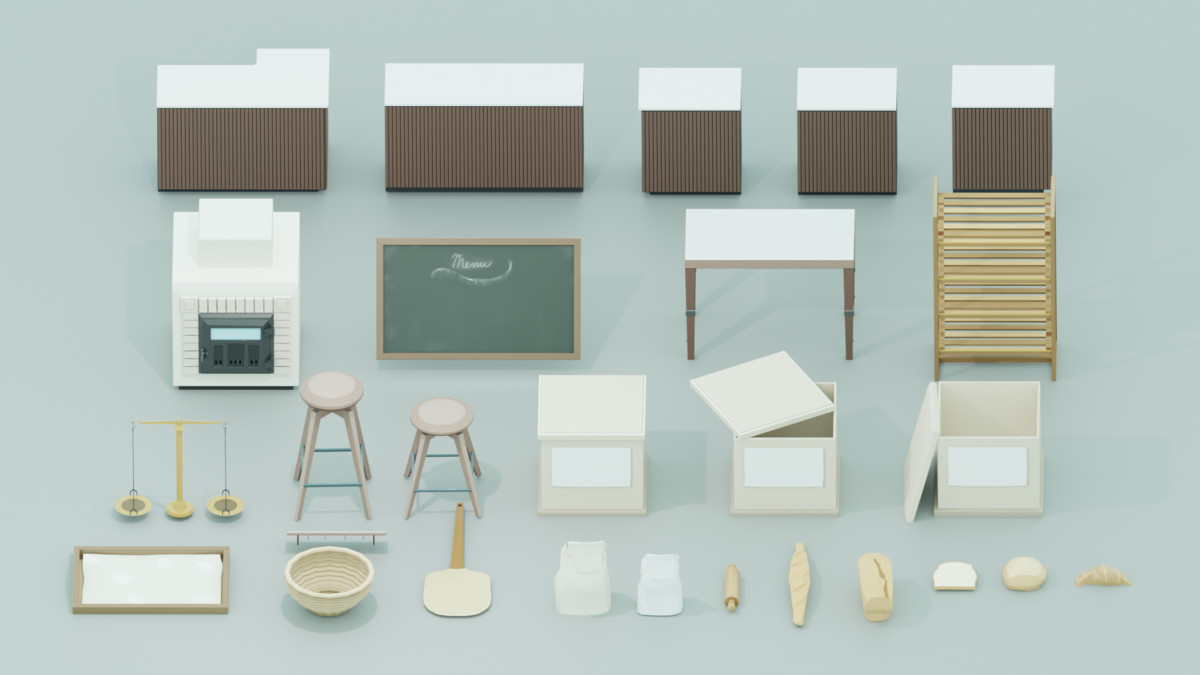
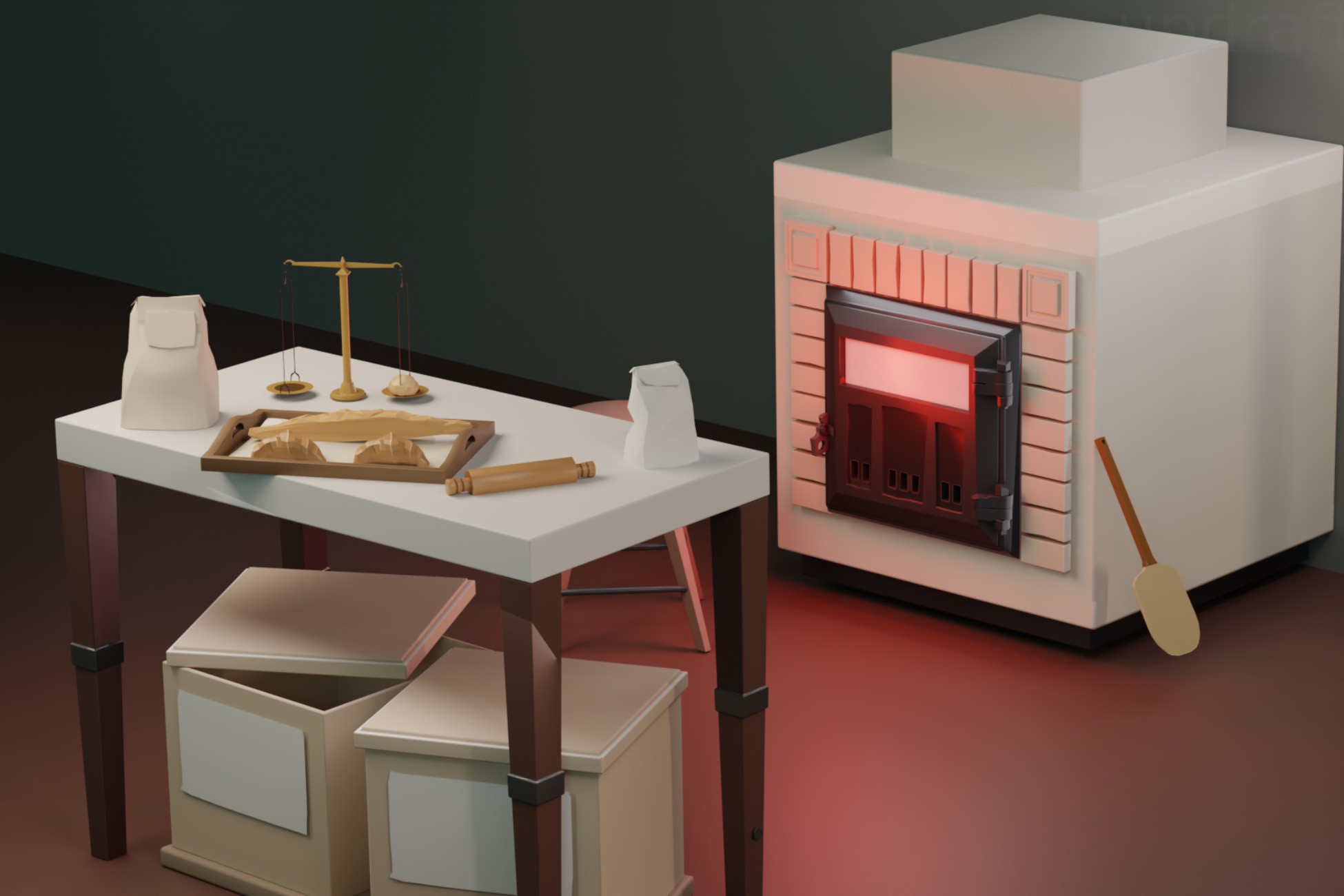
Bread, pastry, counters, tables, and display furniture create a commercial rhythm that feels different from the industrial density of a forge.
Kitchen
Hearth, prep, washing, cookware
A kitchen adds the food-production layer behind taverns, inns, bakeries, and homes without asking the bakery set to represent every cooking task.
Workshop identity
The forge needs a process you can read from the doorway
Start with the station that explains the trade, then place the supporting tools around that process. The result reads faster than a room filled with unrelated medieval clutter.
For a district, that fast read matters because the player is often choosing between several destinations at once.
The Blacksmith Props Pack includes 20 unique models, 24 prefabs, and an animated grindstone.
Commercial contrast
The bakery should feel stocked and customer-facing instead of workshop-heavy
Give the bakery a calmer front-of-house layout with visible goods and a clear service edge. The forge can keep harder silhouettes and denser work zones nearby without making the street feel inconsistent.
The contrast helps navigation. Players can identify the destination by the activity implied through the props before they inspect a sign.
The bakery set includes bread, pastry, shop furniture, 27 prefabs, and 22 unique meshes.
Shared town language
Use signs to connect the shops without flattening their individual identities
Repeated hanging brackets, directional markers, notice boards, and shop-sign shapes give the street a common visual system. That shared layer can make different workshop sets feel planned rather than collected.
Keep the sign system consistent, then let the objects inside each doorway do the rest of the storytelling.
A common signage family can tie several specialist interiors into one readable district.
Core crafting destinations
Buy complete prop vocabularies for the trades the player actually visits
Stylized Blacksmith Props Pack
Forge station, tools, workshop details, prefabs, and animated grindstone for a clear metalworking destination.
Stylized Bakery Props – Bread, Pastry & Medieval Shop Assets
Bread, pastries, furniture, counters, and shop dressing for a commercial food destination with a different rhythm.
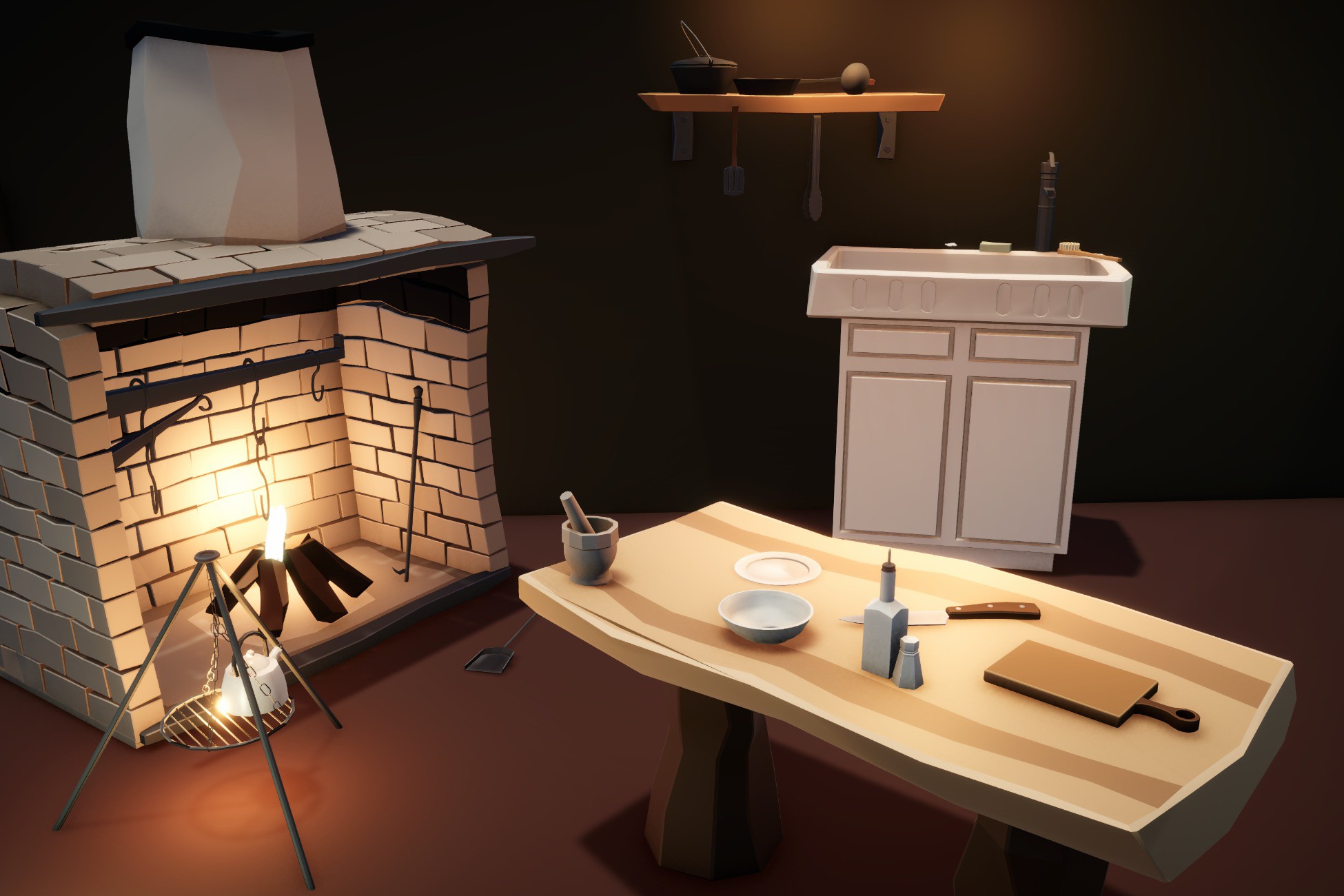
Stylized Medieval Kitchen Props Pack
Hearth, prep, sink, cookware, storage, and utensils for back-of-house cooking areas that support the district.
Tie the street together
Add a common wayfinding layer after the workshop identities are clear
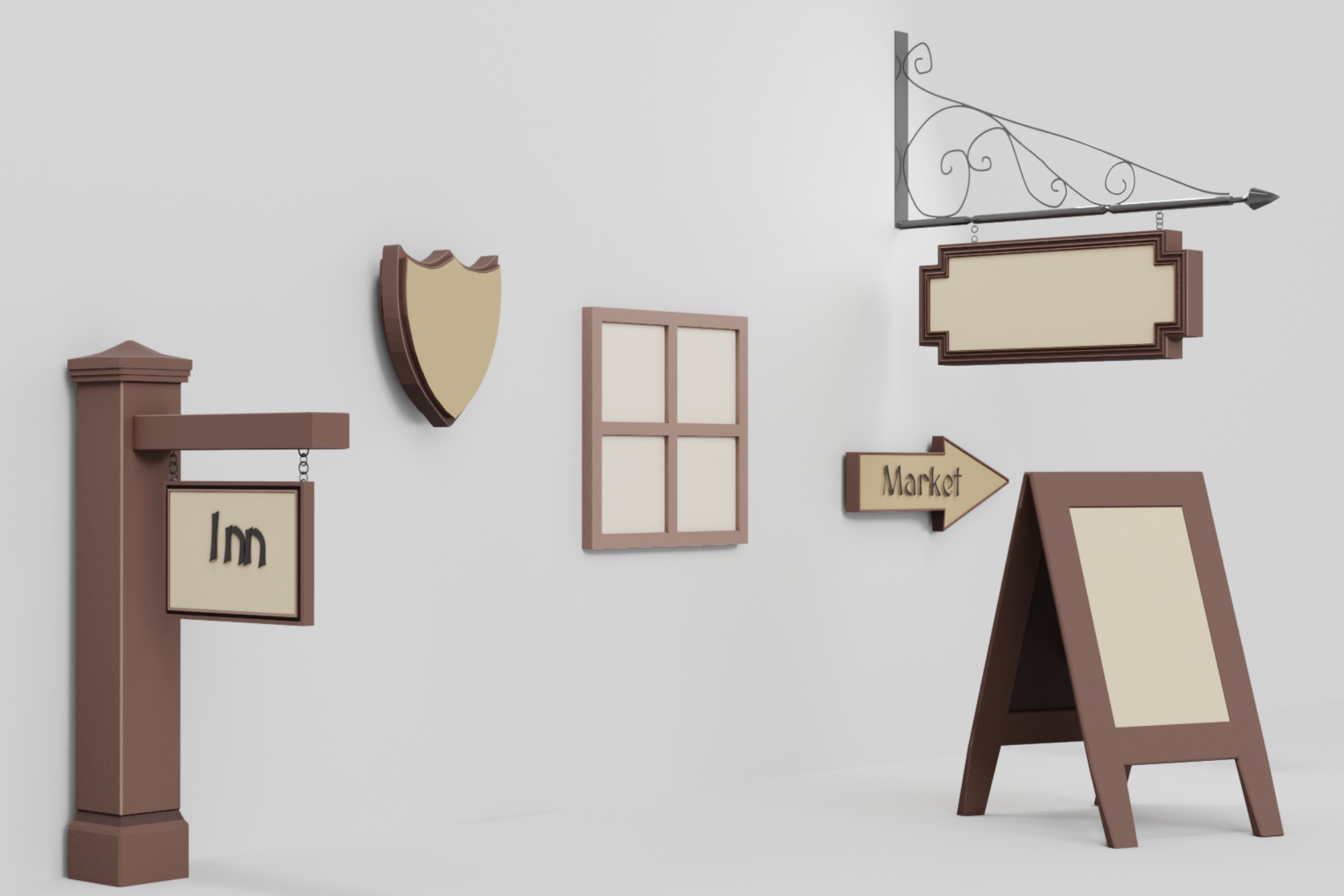
Stylized Medieval Signs & Notice Boards
Hanging signs, crossroads markers, and notice boards that make several specialist shops easier to find and remember.